



Companion article
Story breakdown and lore notes
The video above is the main focus of this page. The written companion, supporting images, and lore breakdown continue below.
Written guide updated October 12, 2026: Replaced reproduced biography passages with a sourced character analysis. The companion video remains the earlier recording.
Why a Bandle City pilot chooses Piltover
Corki's story begins with a choice of home. Riot's champion introduction places him in Piltover after leaving Bandle City. He is drawn to the city's machinery and becomes involved in developing flying vehicles. That establishes his role more clearly than his comic appearance does: he is a pilot whose attachment to an adopted city gives his inventions a purpose.
The useful question is not simply whether Corki is brave. It is what his bravery serves. A machine can be a research project, a spectacle or a weapon. In Corki's case, the same enthusiasm for flight connects invention to civic defense. His story offers a small, concrete way into Piltover: a city can attract outsiders through what it makes, then depend on those outsiders to protect it.
What the Screaming Yipsnakes add to his character
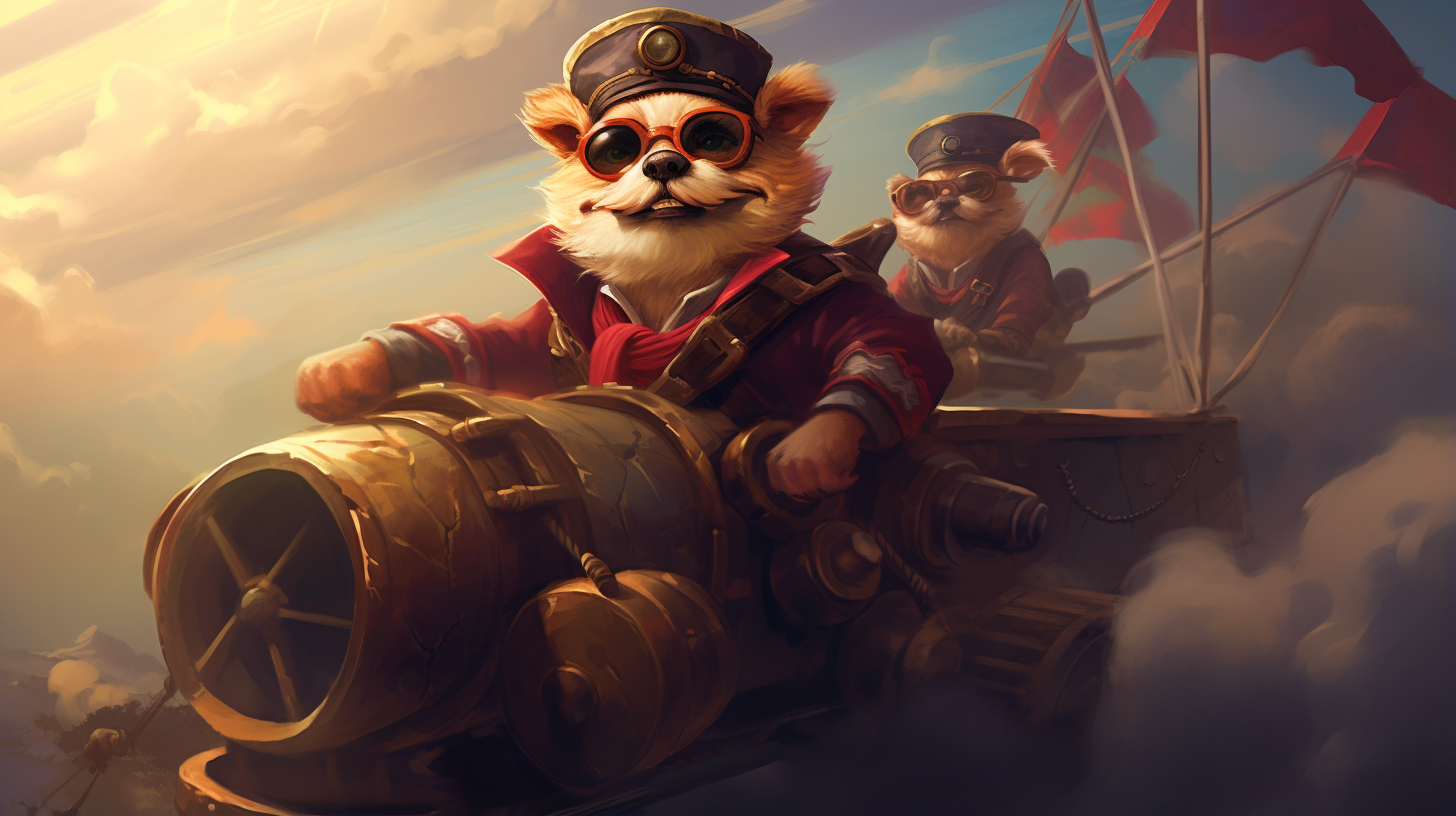
Riot identifies Corki as the leader of the Screaming Yipsnakes, an aerial defense group. The squadron matters because it makes him part of a shared undertaking. A lone inventor can pursue a private obsession; a leader has to make that obsession useful to other people.
Read this as a difference between confidence and responsibility. Corki's confidence is easy to see in his presentation. Responsibility is implied by the job: protecting a home means deciding when to act, and leading a squadron means that other pilots depend on those decisions. The biography does not give a complete campaign history, so it would be a mistake to invent victories to make that point stronger. His stated role already gives us something to examine.
A pilot's power depends on the conditions
For a lore comparison, equipment is part of the character's circumstances. Corki with a flying machine and Corki separated from it are different matchups. This is why a ranking that compares only personal magic misses an important kind of power: a character can become dangerous through preparation, tools and training.
There is also a limit to that argument. Possessing a vehicle does not establish that Corki defeats every opponent on the ground, or that flight defeats every form of magic. A useful comparison asks about space, visibility, starting distance and whether the machine is available. Once those conditions are stated, a reader can disagree with the conclusion for a specific reason.
What the biography does not prove
The official champion page combines a character introduction with gameplay information. These sections answer different questions. A weapon or vehicle can help establish Corki's identity, while a damage number, cooldown or item build describes a particular playable version. Changing a balance statistic is not, by itself, a new event in his life.
Similarly, older story material should be labeled when it is used. An unfamiliar organization or historical reference needs its own source and context. This guide centers on the linked champion introduction, rather than stitching every older description into a supposedly complete current history.
How to read Corki beyond the joke
Corki's comic presentation can make him seem like a disposable gag. A more productive reading looks at the contrast between that presentation and his place in a defense force. The humor makes him memorable; his adopted home makes his actions legible. He does not need a tragic origin to pose a question about belonging.
For a comparison of equipment and magic, continue to the yordle power guide. For the wider setting, read Piltover. Keep the distinction between an established role and a hypothetical victory in mind when moving from biography to ranking.
Back to Home