


Companion article
From the Tower of Eternity to AION 2
Explore Atreia's history, the Elyos–Asmodian divide, and the story that connects AION 2 to the original AION lore.
Daevas in a Broken World
Imagine being chosen to defend your world. You receive wings, extraordinary power, and a life that can stretch across centuries. Now imagine returning to that world and discovering that your people are struggling to survive beneath the rule of their ancient enemies.
That is the situation waiting in AION 2.
The Daevas still fight. But their power is fading, and the Balaur have gained the upper hand. To understand how Atreia reached this point, we need to go back to the world that existed before its people became enemies.
Hello, lore-lovers, and welcome to Liandrug.
Today, we're exploring the story behind AION 2, its connection to the original AION, and the history you need before stepping into this beautiful, wounded world.
Atreia Before the Division
Our story begins in Atreia, a world created by the god Aion.
Its people lived within a remarkable world whose two halves were joined by the Tower of Eternity. This immense structure stood at the center of their existence, linking their home together.
The Tower was also bound to Aion himself, and to Aether, the divine energy that sustained life and gave the world's defenders their strength.
So when you hear the name Tower of Eternity, picture something far greater than a palace or a fortress. Its destruction threatened the very world surrounding it.
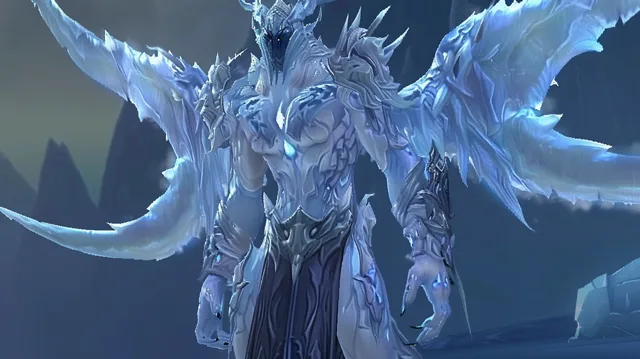
Among Aion's creations were powerful draconic beings who were meant to protect Atreia and its inhabitants.
Over time, however, their strength became a source of ambition. They sought greater power, turned against the order they had been created to preserve, and became the Balaur.
Under the Dragon Lords, they built an empire and brought war to humanity.
This is why the Balaur matter so much to both games. Their conflict with Aion's followers reaches back to the foundations of the world. The people who once depended on their protection became the people they threatened to conquer.
Ascension and the Millennium War
To defend humanity, Aion created the twelve Empyrean Lords.
Under their protection and guidance, some humans learned to wield Aether and underwent Ascension. They gained wings, immense abilities, and immortality. These ascended humans became known as Daevas.
If you've played AION, this is the identity at the heart of your character.
A Daeva carries the power to resist enemies ordinary humans could barely hope to face. But that gift also brings a responsibility that can last far beyond a human lifetime.
The Empyrean Lords and their Daevas fought the Balaur in the conflict remembered as the Millennium War.
Failed Peace and the Cataclysm
Eventually, the possibility of peace emerged.
The Dragon Lords were invited to negotiations at the Tower of Eternity, and its protective Aetheric Field was lowered to admit them.
For a brief moment, the enemies stood together inside the place humanity depended upon most.
Then violence broke out.
The surviving faction accounts disagree over responsibility, and each carries the bitterness of what followed. What is clear is that the negotiations collapsed, the Balaur attacked the Tower, and Atreia suffered the Cataclysm.
The Tower shattered. The world split into two halves.
Siel and Israphel, its guardians, expended their power to prevent complete destruction.
They preserved a future for Atreia's survivors. Those survivors would spend generations arguing over who had destroyed their past.
How the Elyos and Asmodians Became Enemies
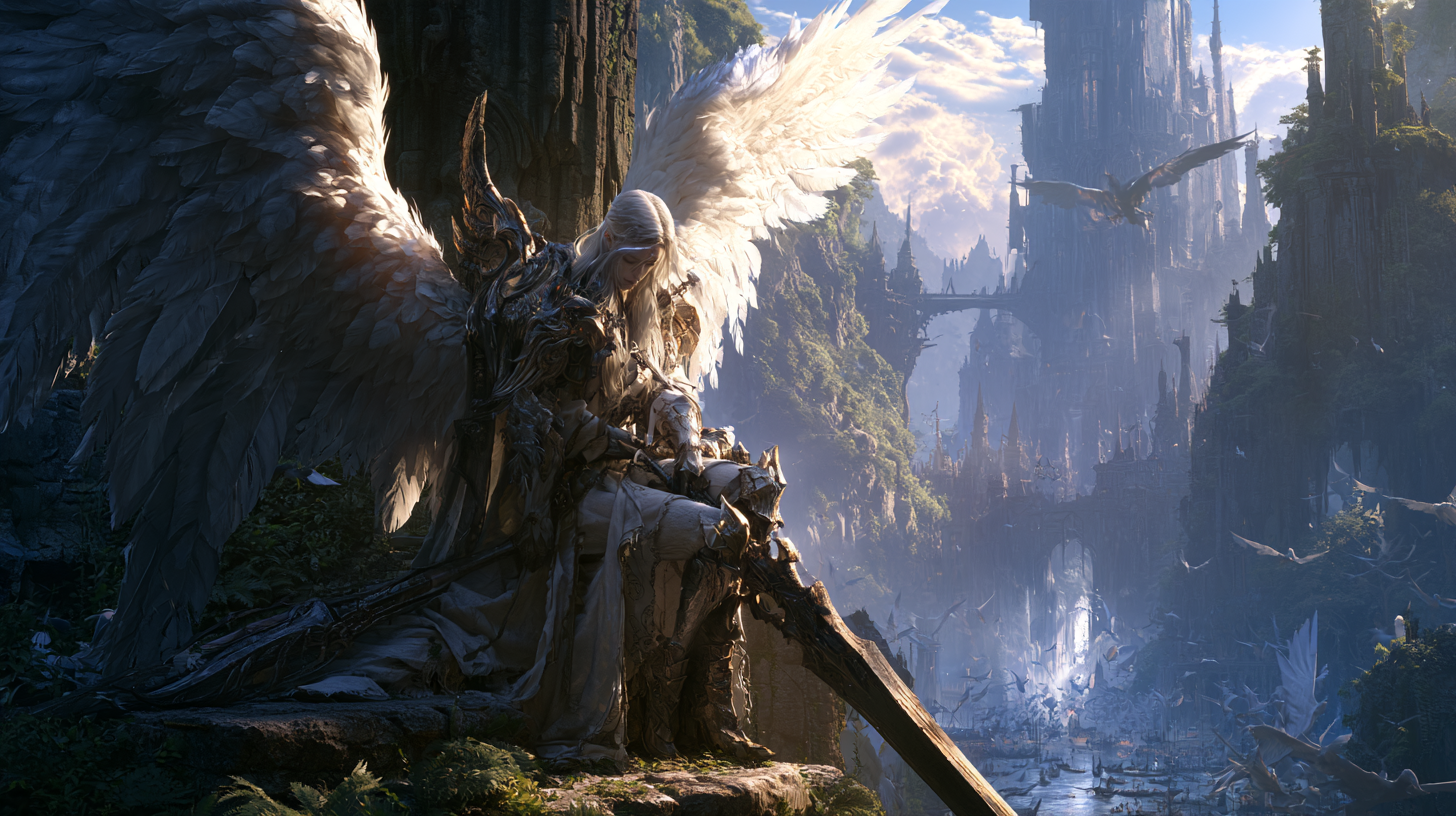
The people who settled in the lower half, Elysea, became the Elyos. Those in the upper half, Asmodae, became the Asmodians.
Separated for generations, they developed different cultures and appearances.
The Elyos lived in a brighter, more hospitable environment. The Asmodians adapted to a harsher land with far less light. The original game's visual designs reflected those environments, giving the Asmodians features such as pointed claws and a mane along their backs.
But appearances can give newcomers the wrong impression.
The original AION describes the Elyos as radiant and beautiful, while also warning of their arrogance. The Asmodians are fierce toward outsiders, yet generous and deeply loyal to their own people.
Both factions have communities worth protecting. Both have reasons to fear and resent the other.
Neither side approaches the conflict believing that its own people deserve to disappear.
That makes their war more tragic: every enemy soldier has a home, a history, and a version of events in which the other faction is responsible.
The Abyss and the War for Aether
Between the broken halves of Atreia lies the Abyss.
The Tower's destruction destabilized Aether, creating this dangerous region and reconnecting peoples who had long been separated.
Their conflict also carried a terrifying belief. In the original game's lore, scholars argued that the broken Tower's instability was draining Aether and threatening the world's survival. Destroying the opposing faction's Tower fragment was presented as a way to stop that process.
An enemy's destruction could therefore be imagined as your people's salvation.
The Balaur entered this struggle too, turning the Abyss into a battlefield between three powers.
Before we venture into AION 2, lore-lovers, leave a like and subscribe if you're enjoying the story. It helps Liandrug grow and gives me the support to make more videos exploring worlds like this.
Now, let's see what became of Atreia.
AION 2: Two Hundred Years Later
NCSOFT places AION 2 two hundred years after the original game.
We return to Atreia, with the Elyos and Asmodians still at the center of its story. Each faction begins in its own regions, and the developers describe their journeys as eventually leading into large-scale conflict between the realms.
So the old division continues to matter. You enter a world whose people have inherited the identities and hostilities of the first game.
But the balance of power has changed.
The official global premise describes the Tower of Eternity as collapsed, the Daevas as gradually losing their strength, and the Balaur as an oppressive force beneath which they struggle to survive.
The warriors who once rose into the skies to defend their civilization now face the task of rebuilding it.
The Last War and the Bulwark
The sequel's account describes a disaster remembered as the Last War. At the end of the Elyos–Asmodian conflict, the Tower fell and its protection vanished.
The Balaur advanced into the exposed lands.
The Empyrean Lords gathered their remaining power to create the Bulwark, a final defense bought through enormous sacrifice. Beyond its protection, communities remained vulnerable to conquest.
Ishtar, Fafnir and the Captured Daevas
Two Dragon Lords dominate this part of the story: Ishtar and Fafnir.
Their armies devastated lands such as Poeta and Ishalgen.
And their treatment of the Daevas makes their rule especially horrifying. Captured Daevas were exploited as fuel and subjected to experiments that produced creatures capable of attacking their own kind.
Fafnir's corruption reached into their souls, binding their light within gems and turning them into destructive servants known as Fafnites.
The power that once made a Daeva a defender of Atreia could now be stolen and used against its people.
Your Journey and the Empyrean Lords' Lost Power
Your journey grows out of this broken world.
The faction campaigns give you different beginnings and companions. The Elyos opening involves captivity in Poeta and rescue by the Legion of Dawn. The Asmodian opening follows a disastrous mercenary expedition in Ishalgen.
Both lead toward Ascension and a mystery surrounding fragments of Aion and the missing power of the Empyrean Lords.
A central goal is recovering the Lords' cores, remnants associated with their divine power.
On the Elyos side, the search connects to Pernos and Kaisinel. On the Asmodian side, Zikel becomes central to the journey.
I'll leave the major revelations for you to discover. What matters here is that rebuilding Atreia means seeking power and knowledge that survived its catastrophe. The past still holds possibilities its survivors desperately need.
Familiar Places in a Changed Atreia
For returning players, that past also appears in familiar places.
NCSOFT has brought back the Fire Temple in a reimagined form. The Korean and Taiwanese story expansion, Lands of Sand and Snow, also opened Eltnen and Morheim, regions veterans will recognize from the original.
Those names connect the two games, even as the sequel gives them new environments and stories.
A Future Worth Rebuilding
What draws me to AION 2's premise is the position it puts its heroes in. They inherit a world shaped by divine gifts, terrible losses, and generations of conflict. Their enemies have learned to exploit the very power they relied upon.
Yet there are still survivors to protect and a future to build. When your character opens their wings, that history travels with them. And I want to know what they'll do with it.
Tell me in the comments, lore-lovers: would you choose the Elyos or the Asmodians? And if you played the original AION, which part of Atreia would you most like to revisit? If you enjoyed this journey, like, share, and subscribe to Liandrug. You can also join our cozy Discord community to talk about AION and the other worlds we explore together.
Thank you for watching, lore-lovers. I'll see you in the next story.
Back to Home