



Companion article
Story breakdown and lore notes
The video above is the main focus of this page. The written companion, supporting images, and lore breakdown continue below.
Opening
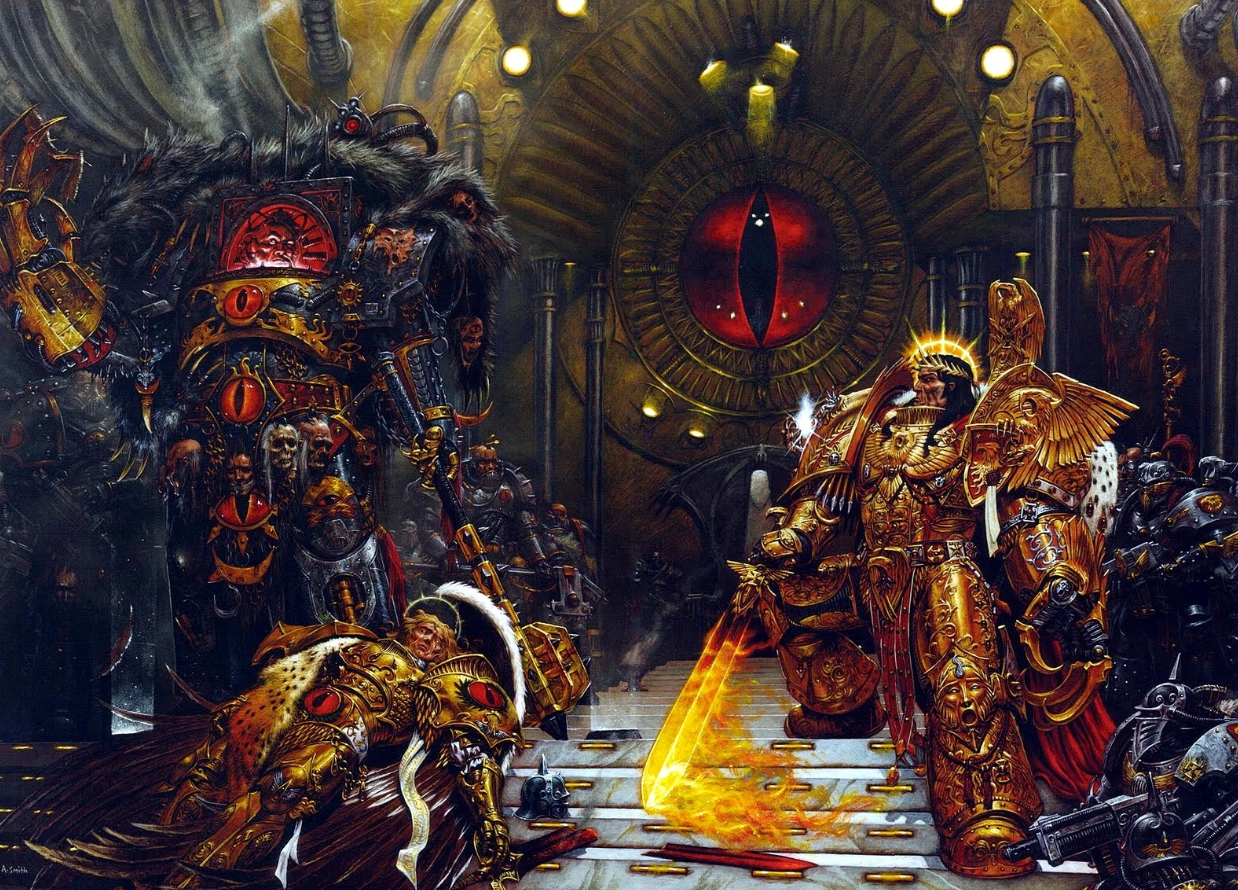
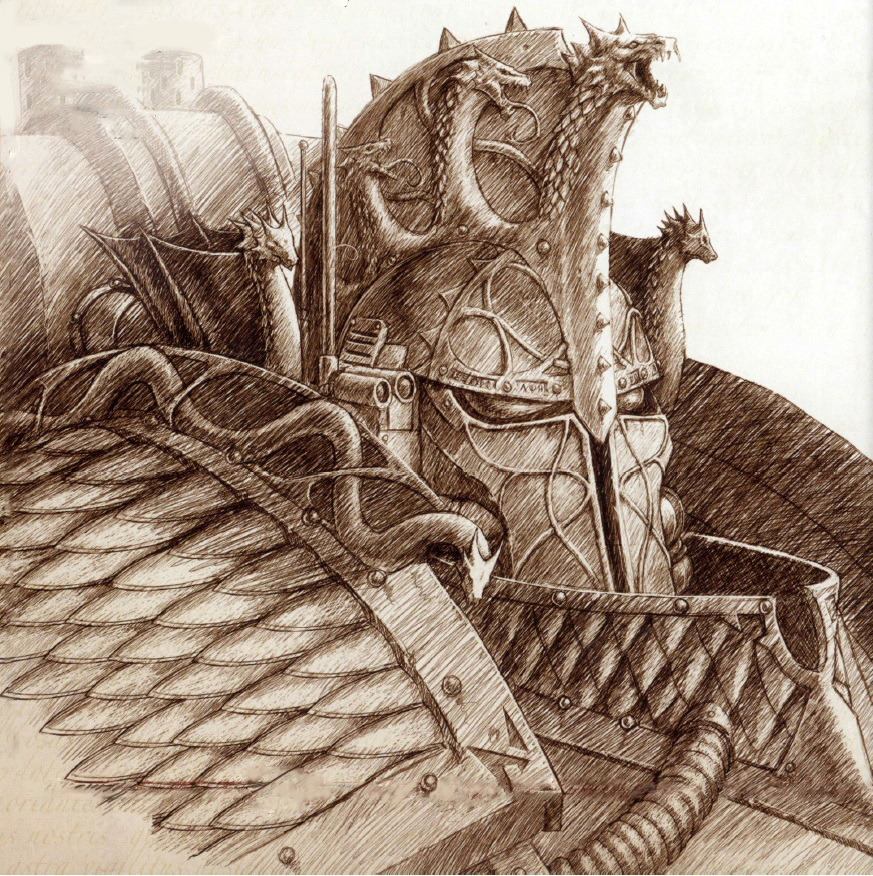
Among his brothers, sanguinius stood as one of the most noble and admired, even earning the respect of Horus himself. Yet, in the final moments of the horus heresy during the siege of terra, sanguinius met a tragic fate. He fell while defending the emperor aboard horus' flagship, the gloriana-class battleship vengeful spirit.
Although horus, once sanguinius' closest friend, dealt the fatal blow, imperial legend tells that the wound Sanguinius inflicted on the warmaster's armor paved the way for the emperor to defeat horus, ultimately preventing mankind from succumbing to the ruinous powers of chaos.
Welcome back, lore-lovers, to Liandrug! Today, we delve into the tragic and heroic tale of Sanguinius, the beloved Primarch of the Blood Angels. From his glorious battles against the forces of Chaos to his ultimate sacrifice during the Horus Heresy, Sanguinius' story is one of valor, tragedy, and unyielding loyalty to the Emperor. So, grab your favorite beverage, settle in, and let's explore the depths of this legendary figure in the Warhammer 40k universe!
The Chronicle
The Space Marine Legions stood as the Emperor of Mankind's greatest achievements, crafted to help Him conquer the galaxy and reunite the scattered colonies of Humanity after the Age of Strife. Among these legions was the Blood Angels, the IX Legion, who from their earliest days fought with unwavering loyalty to both the Emperor and their primarch.
The Blood Angels, like all First Founding Legions, emerged from the ruins of the Age of Strife. Having united the warring factions of Terra through the Unification Wars, the Emperor's ambition reached far beyond one planet or solar system. His grand vision was to reunite Humanity across the galaxy, bringing together its fractured realms under a single, benevolent rule. To achieve this, He needed an army like no other--an army of warriors loyal only to Him, with bodies and minds hardened to endure endless warfare. Thus, the Space Marines were born.
The Emperor, a master of genetic manipulation, created twenty remarkable transhuman super-warriors, each reflecting an aspect of war, to lead this army. These were the primarchs, beings whose strength was second only to the Emperor Himself. Yet, His plans faltered before they could fully take shape. The primarchs were stolen from His laboratory beneath the Himalazian Mountains, scattered across the galaxy by a mysterious force through the Warp.
Not long after the Emperor's creation of the primarchs, the Ruinous Powers of Chaos seized the infants, carrying them away through the Empyrean. Though unable to destroy them due to the powerful psychic protections the Emperor had placed on their gestating forms, the Dark Gods sought to corrupt them for their own purposes. Thus, the Emperor's finest creations were tainted from the very start.
Sanguinius' gestation pod came to rest on Baal Secundus, a barren moon, at the place now known as Angel's Fall. There, a wandering tribe known as the "Folk of Pure Blood," or simply "the Blood," discovered the infant. Though touched by Chaos, Sanguinius bore only small wings on his back, like those of an angel. Despite fears that he was a mutant, compassion won out, and the child was spared.
Sanguinius was angelic not just in appearance, but in spirit. The Blood Angels hold sacred many parables and psalms about him, transcribed over the years by their Librarians and kept in their most revered shrine-archives.
Though much of his early life is lost to time, the stories of his childhood have become part of Baalite legend. Sanguinius grew at an astonishing pace, as did his wings. His feathers, pure white and strong as those of the Imperial Aquila, allowed him to soar above the desert, inspiring awe among those who saw him. In just three solar weeks, he grew as large as a child of three Terran years and could already walk. It's said that, at this age, he slew a giant fire scorpion with his bare hands, without fear. By his first standard year, Sanguinius appeared and acted like a man in his prime, walking unprotected through Baal Secundus' radioactive wastelands and surpassing his teachers in all weapons and skills. He could carve through rock with a hand's blow, subdue wild beasts with a glance, and soar into the sky to view the land below like a god. Under his guidance, his tribe flourished.
When a band of mutants attacked his tribe, Sanguinius, in a fit of rage, slaughtered them all, over a hundred in number. This was the first time the tribe had witnessed his full power, his eyes blazing with anger as a nimbus of light crowned his head. In the years that followed, he led his people to the pinnacle of Baalite society, uniting the tribes and driving back the mutants that infested their world. Under his leadership, Humanity regained its foothold on Baal Secundus, and Sanguinius became worshiped as a god by those he saved. But it was not long before fate would intervene again.
The loss of the Primarchs was a devastating blow, but the Emperor pressed on, unable to recreate them but still possessing their genetic material. From this, He crafted the Space Marine Legions, powerful armies meant to be led by His lost sons. With these Legions, the Emperor launched the Great Crusade around 798.M30, determined to restore Humanity's greatness. The Space Marines swept across the galaxy, toppling despots, aliens, and Daemons. Countless human worlds were liberated, their inhabitants rallying to the Imperium's cause.
As the Crusade progressed, the Emperor finally found His lost Primarchs, reuniting with them one by one. His incredible psychic abilities led Him to Baal in 843.M30, where He discovered Sanguinius. At a massive gathering in Baal's natural amphitheater, Sanguinius delivered a speech so inspiring that even the Emperor stood in awe. When they met, Sanguinius immediately recognized his father. Legend claims that his gift of foresight had revealed the Emperor's arrival. Sanguinius wept tears that sprouted flowers on Baal's toxic soil, and the Emperor embraced his noble son. Soon, Sanguinius' finest warriors became Astartes, infused with his gene-seed, forming the Blood Angels, the IXth Legion.
Sanguinius' Blood Angels earned a reputation as shock troops in the Great Crusade, always by the Emperor's side. Their restrained ferocity, tempered by Sanguinius' wisdom, set them apart from more savage Legions like the World Eaters. Sanguinius formed strong bonds with his brothers, particularly Horus, Leman Russ, and Jaghatai Khan. However, Sanguinius' nobility and purity of spirit placed him in a league of his own, even earning the quiet admiration of Horus, the Emperor's favored son and newly appointed Warmaster after the victory at Ullanor.
When the Emperor retired to Terra to focus on His secret Webway Project, the Primarchs struggled with feelings of abandonment. The Emperor's absence, and His silence about His plans, sowed discord among them. This discontent would be Horus' undoing, as his fall to Chaos marked the beginning of the Horus Heresy. Amid this treachery, the Blood Angels remained loyal, never faltering in their duty to the Emperor.
The Horus Heresy deeply scarred the Blood Angels, shaping their future in tragic ways. At its height, Warmaster Horus, the Emperor's favored son, betrayed the Imperium, sparking a civil war that lasted nine years and culminated in a battle at the Imperial Palace. During this chaos, Sanguinius, the Primarch of the Blood Angels, faced a devastating realization: his Legion suffered from the Red Thirst, a genetic flaw. Though Horus vowed to keep this secret, he later exploited it to try and corrupt the Blood Angels.
Horus sent Sanguinius and his Legion to the Signus Cluster, deceiving them into a deadly trap ruled by Kyriss, a Greater Daemon of Slaanesh. In their fury, the Blood Angels unleashed the Black Rage, a berserker fury that would haunt them for millennia. Though they ultimately defeated the forces of Chaos, the cost was high, and the Red Thirst became more pronounced.
Before we continue, I want to take a moment to thank you all for joining me on this journey through lore. If you're enjoying the content and want to see more stories like this, please take a second to like this video and subscribe to the channel. Your support helps Liandrug grow, allowing me to create even more in-depth explorations of the lore you love!
After their campaign, the Blood Angels arrived in Ultramar, where Roboute Guilliman declared Sanguinius the ruler of Imperium Secundus, a temporary solution to continue fighting against the Traitors. This new order was challenged when the Night Lords' Primarch, Konrad Curze, sowed chaos. Eventually, Curze was captured, but tensions among the Loyalist Primarchs grew. Sanguinius, understanding his fate, spared Curze, acknowledging that their destinies were intertwined with the Emperor's plan.
The Blood Angels' finest hour came during the Battle of Terra, the climax of the Horus Heresy. This final campaign unfolded on Terra itself, as Warmaster Horus led his Traitor Legions against the Emperor's Loyalist forces. Though many Loyalist legions were delayed by the Warmaster's schemes, the Blood Angels, White Scars, and Imperial Fists made it to Terra in time to defend the Imperial Palace alongside the Emperor and His vast armies, which included three Titan Legions and millions of Imperial soldiers.
Sanguinius, the Primarch of the Blood Angels, was at the forefront of the palace defense, leading his Legion as they fought bravely against impossible odds. The Blood Angels, alongside the Imperial Fists, the Legio Custodes, and the remnants of the Imperial Army, manned the fortifications of the palace. Sanguinius himself was immortalized in stained glass as he fought high above the battlefield, confronting daemons of terrifying power who sought to breach the Emperor's sanctum.
Despite countless losses, the Blood Angels held firm, especially during the defense of the Eternity Wall spaceport, where their valiant efforts and the shining presence of their Primarch bolstered their resolve. However, it was atop the Eternity Gate, at the heart of the palace, where Sanguinius would face the powerful Bloodthirster Ka'Bandha. In a fierce duel, though injured, Sanguinius ultimately shattered the daemon's back and hurled it into the horde, sealing the palace doors and buying the defenders precious time.
As the Traitor Legions pressed their assault, Horus, confident of victory, lowered the psychic defenses of his flagship, the Vengeful Spirit, to lure the Emperor aboard for a final confrontation. Seizing this opportunity, the Emperor, Sanguinius, and Rogal Dorn teleported onto the ship with a strike force of Blood Angels, Imperial Fists, and Custodians. In the chaos of battle, Sanguinius became separated from the Emperor and encountered Horus alone.
Horus, now fully consumed by the power of the Chaos Gods, offered Sanguinius a chance to join him, but the Blood Angels' Primarch, true to his loyalty, refused. Enraged, Horus attacked, and despite his wounds from earlier battles, Sanguinius fought back. Though valiant, the weakened Primarch stood no chance against the empowered Warmaster. Horus killed Sanguinius in a display of cruelty so extreme that the psychic pain echoed through time and space, scarring the souls of all his Blood Angels descendants.
The Emperor eventually reached the throne room to find the lifeless body of His son, Sanguinius. In the fierce duel that followed, the Emperor defeated Horus, but only after suffering mortal wounds. It is said that Sanguinius' earlier strike had weakened Horus, allowing the Emperor to land the final blow.
The death of Sanguinius marked a tragic turning point for the Blood Angels. His psychic death cry echoed through the Legion, forever imprinting the Black Rage and Red Thirst into their genetic legacy. These curses still haunt the Blood Angels, causing them to be consumed by visions of their Primarch's final moments.
After Horus' defeat, the Imperium was forever altered. The Emperor, gravely injured, could no longer lead His forces, and His shattered body was kept alive only by the Golden Throne. The task of rebuilding the Imperium and eradicating the remaining Traitor forces fell to the surviving Primarchs, including Rogal Dorn of the Imperial Fists and Roboute Guilliman of the Ultramarines. Guilliman's Codex Astartes, a treatise on restructuring the Space Marines, aimed to prevent any one individual from wielding the full might of a Legion. He mandated the division of Legions into 1,000-man units called Chapters. Though controversial, this edict ultimately prevailed, marking the end of the Legiones Astartes and the beginning of the Adeptus Astartes.
For the Blood Angels, this transition was especially painful. They had just lost their Primarch, Sanguinius, at Horus' hands during the final moments of the Heresy. Stricken by grief and devastated by the losses at the Battle of Terra, they were now ordered to divide their close-knit brotherhood. To make matters worse, the first signs of the Flaw, later known as the Black Rage, began to manifest within the IX Legion. This affliction, a result of their traumatic battles with Chaos and the psychic echo of Sanguinius' death, cursed the Blood Angels with uncontrollable rage and visions of their Primarch's final moments.
Despite this, under the guidance of Azkaellon, the last surviving member of the Sanguinary Guard, the Blood Angels split into several Chapters. These new formations were led by the Blood Angels' champions, each retaining the traditions of the Legion. Among them was Nassir Amit, known as the "Flesh Tearer," whose brutal crusades against the Traitors set the tone for the savage reputation of his Chapter, the Flesh Tearers.
Sanguinius' body was retrieved by his Blood Angels and taken to their homeworld, Baal, where he was entombed beneath their main chapel. Honored by effigies and remembered throughout the Imperium, Sanguinius' sacrifice made him one of the most revered Primarchs, second only to the Emperor. His legacy lives on, celebrated on the sacred day of the Sanguinala, when the Imperium remembers his noble sacrifice that allowed the Emperor to strike down Horus.
However, the Blood Angels' heroism came at a great cost. Burdened by their genetic curse, the Chapter became feared and mistrusted, their need to conceal their secret thirst for blood an ever-present struggle.
Sanguinius' ability of foresight, both a blessing and a curse, had long haunted him. Like the Emperor, he could see glimpses of the future, though often unclear and without control. This foresight weighed heavily on Sanguinius, isolating him as he wrestled with dark premonitions. Few of his sons inherited this gift, and those who did were known as "the Forsaken," warriors fated to foresee the moment of their own deaths. They carried this grim knowledge with a fatalistic outlook, knowing their foresight brought only sorrow and doubt.
Closing Words
Thank you for watching, lore-lovers! I hope you enjoyed our deep dive into the story of Sanguinius. If you liked this video, don't forget to share it with fellow enthusiasts and subscribe for more lore content. And for those of you looking to connect with like-minded fans, join our Discord community! Together, we can create a cozy environment where lore-lovers can discuss their favorite stories and characters. Until next time, keep your eyes on the stars and your hearts with the Emperor!
Back to Home