



Companion article
Story breakdown and lore notes
The video above is the main focus of this page. The written companion, supporting images, and lore breakdown continue below.
The Chronicle
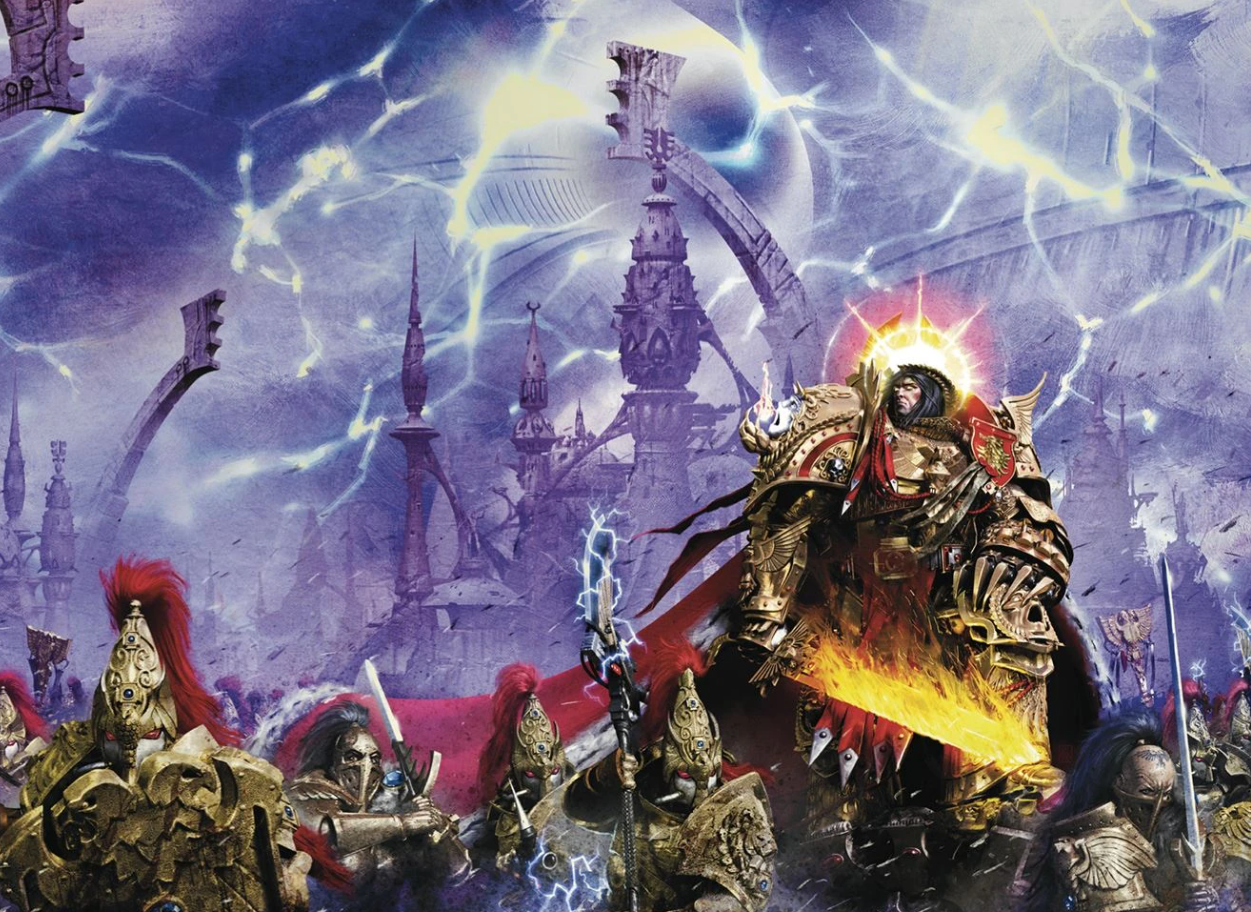
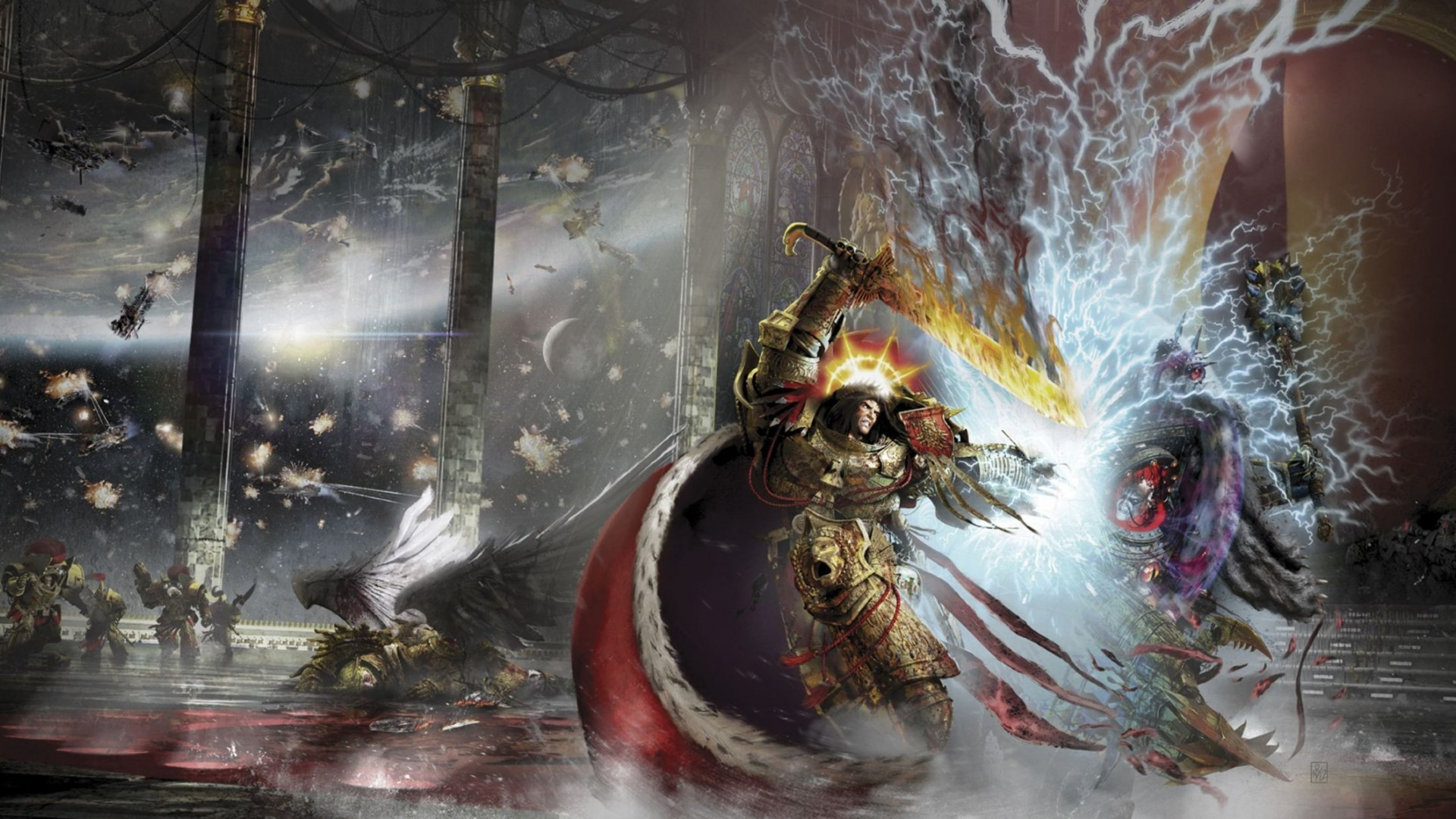
The Emperor, on the brink of death, directed Dorn to modify the Golden Throne into an arcane life support machine that sustained His cells in a state between life and death for over ten thousand years. Interred within this altered throne, the Emperor maintained the Astronomican and battled Chaos in the Warp using the psychic energies of 1,000 psykers daily.
With his strength waning, the Emperor conveyed final instructions to Dorn before entering unending stasis for millennia, his mind active in the Warp while his body slowly decayed.
His internment within the Golden Throne, modified to sustain His mind and decaying body.
The Imperial Cult claims that this internment allowed the Emperor to ascend as the true god of Mankind, sacrificing Himself to save Humanity from Horus.
The Golden Throne functions as a life support device and psychic amplifier, projecting the Emperor's essence into the Warp and powering the Astronomican.
Guarded by the Companions of the Emperor, the Golden Throne is maintained by Tech-priests of the Adeptus Mechanicus.
It is powered by a choir of 10,000 Human psykers, sacrificed daily aboard the Black Ships of the Adeptus Astra Telepathica to maintain the Imperium's survival.
As the Imperium faces assaults from Chaos, including Abaddon's 13th Black Crusade and the fall of Cadia, a surprising event occurs: Primarch Roboute Guilliman is resurrected after ten thousand years of stasis.
Revived with the aid of Archmagos Dominus Belisarius Cawl and the Aeldari god Ynnead, Guilliman returns to Terra and meets with the Emperor. His role shifts to leading the Imperium through the Indomitus Crusade, utilizing the new Primaris Space Marines.
However, a grave revelation emerges in 999.M41: the Golden Throne's life support systems are failing, and the Adeptus Mechanicus lacks the knowledge to repair them.
Without a solution, the Emperor's mummified body will perish, leaving Humanity vulnerable amidst the chaos of the Warp. The Imperium's survival hangs in the balance, awaiting a miracle or intervention.
Indeed, the irony of the Emperor's deification amidst His efforts to eradicate superstition and organized religion underscores the complexity of His legacy. Lorgar's Lectitio Divinitatus presented a compelling narrative that framed the Emperor not merely as a mortal leader but as a divine figure.
The book argued that the Emperor's unparalleled achievements and extraordinary abilities defied mortal limitations, leading many to embrace the notion of His divinity. This belief spread rapidly, with various cults dedicated to Emperor-worship emerging even before the culmination of the Great Crusade.
These cults, often adopting the name of the Lectitio Divinitatus, revered the Emperor as a god incarnate, attributing to Him supernatural qualities and divine purpose. Despite the Emperor's aversion to such beliefs, the fervor of His followers ultimately set the stage for the Imperial Cult to become the state religion of the Imperium in later millennia.
The evolution of the Emperor's status from secular ruler to divine figure within the Imperium is a profound shift that reflects the complex interplay of history, faith, and power. Despite the Emperor's initial intent to eradicate religious beliefs and superstitions through the Imperial Truth, the Lectitio Divinitatus and subsequent cults emerged, attributing divine qualities to the Emperor.
This divergence from the Imperial Truth was viewed as heresy and punishable by severe measures, as demonstrated by the fate of Lorgar and the Word Bearers. However, the tumultuous era of the Horus Heresy and subsequent challenges faced by Humanity saw the emergence of a widespread devotion to the Emperor as a symbol of hope and protection against the terrors of Chaos.
The Adeptus Astartes, grounded in the truth of their origins and purpose, maintained their reverence for the Emperor as a mortal exemplar rather than a deity, leading to friction with the burgeoning Ecclesiarchy and Inquisition, which championed the Emperor's divinity.
By the 32nd Millennium, the Imperial Cult had become the state religion of the Imperium, with the Ecclesiarchy serving as its vast religious institution. The Emperor, once a mortal ruler, had become the focal point of divine worship and governance, with His will interpreted and enforced by the institutions of the Imperium.
This transformation underscores the enduring power of faith and the complex legacy of the Emperor, who, despite His original intentions, became a central religious and political figure in the galaxy-spanning Imperium of Man.
The depiction of the Emperor as a god-like figure within the Warp, fueled by the collective faith of trillions of believers across the Imperium, underscores the profound impact of belief and perception on the Immaterium. Despite His physical decay, the Emperor's consciousness has ascended to a state of immense power within this psychic realm, rivaling even the Chaos Gods themselves.
The Golden Throne, serving as both a life support mechanism and a psychic amplifier, allows the Emperor to project His mind across the galaxy, guiding the Astronomican and exerting influence through various psychic means. His cryptic communications with psykers and those with unwavering faith highlight His ongoing role in shaping events and protecting Humanity from the encroaching darkness of Chaos.
The belief that the Emperor's absence from the Immaterium would lead to the catastrophic incursion of Chaos underscores His pivotal role in preserving the Imperium and holding back the forces of disorder. His enduring agony and dissatisfaction with the state of the Imperium reflect a complex narrative of sacrifice and existential responsibility.
The Emperor's occasional interventions through chosen agents, fanning the flames of hope amid the encroaching darkness, reveal a figure burdened by the consequences of His own legacy and the limitations of His current state. As the Imperium faces unprecedented challenges and the mechanisms of the Golden Throne approach their limits, the fate of Humanity hangs in the balance, guided by the enigmatic will of the God-Emperor.
The concept of the Star Child in relation to the Emperor is similar to that of the Aeldari's potential god Ynnead, the Lord of the Dead, who according to their belief will form in the Infinity Circuits of the Aeldari craftworlds when the last of their race has died on the physical plane.
The belief in the Star Child is currently considered by the Inquisition to be a vile heresy spread by Chaos Cultists of Tzeentch, though the truth of the matter might be otherwise. The concept has two aspects: the first is that the Emperor's soul exists in the Warp where it will form a new entity upon the Emperor's death -- the Star Child -- who will become the Emperor Reborn, and the second is that the Emperor during His long life on Terra has many living descendants.
Over the almost 50,000 years the Emperor walked hidden among Mankind, He formed many families and fathered many children. His male descendants have inherited direct portions of the Emperor's genome and they are immortal like their father, though unlike Him they are sterile in every case. His female descendants are simply normal Human women, though they may exhibit potent psychic abilities, particularly forms of precognition.
Unlike the Emperor, who is the greatest psyker ever born in the galaxy, the Emperor's scions are actually psychic "blanks" or "Nulls" possessing no presence in the Warp. As a result, they are both undetectable by psychic means and cannot be affected in any way by psychic or sorcerous powers.
A hidden group within the Imperium that call themselves the Illuminati know of the existence of the Emperor's scions, and are also aware that the Emperor is failing as his life slowly gutters out despite the creaking ministrations of the Golden Throne. They also know of the Fall of the Aeldari which gave birth to the Chaos God Slaanesh and seek to prevent Mankind's own fall to Chaos.
The fall of Humanity to the Ruinous Powers would create a new, fifth major Chaos God in the Immaterium, and with its birth, the Warp would once again intrude into realspace for a number of millennia, encompassing the entire galaxy in massive Warp Storms, as during the Age of Strife.
The Illuminati, who as a group are those incredibly rare individuals who managed to actually survive and defeat a daemonic possession of their bodies through sheer willpower, seek out the Emperor's descendants and tell them of their true heritage. With the realisation that this knowledge brings, the biological sons of the Emperor then become known as the "Sensei."
The Illuminati gather the Sensei, descendants of the Emperor, and protect them from the Inquisition, aiming to facilitate the Emperor's rebirth. They plan to sacrifice the Sensei when the Emperor's body fails on the Golden Throne, renewing him with their life forces to lead Humanity once more.
The concept of the Star Child was part of the original Warhammer 40,000 lore but was dismissed in later editions. It suggests that the Emperor's soul, a remnant of ancient shamans, survived Horus' attack and exists in the Warp. This soul, known as the Star Child, awaits rebirth to become a benevolent god of Humanity.
The Inquisition opposes belief in the Star Child, viewing it as heresy linked to Chaos. They consider the Sensei, also called "Emperor's Sons," enemies. The Inquisition has discovered weapons powered by negative psychic energy, possibly sourced from the Emperor's byproducts or the Sensei's bodies.
The Thorian faction of the Inquisition subscribes to a resurrectionist belief similar to the Star Child, known as the God-Incarnate. They propose that the Emperor's divine essence in the Warp can be transferred to a physical vessel, a specially-chosen Human receptacle called a "Divine Avatar."
Closing Words
We hope you enjoyed this glimpse into the Emperor's post-Heresy era. Don't forget to like, share, and subscribe for more Warhammer 40,000 lore content. Join our Discord community to continue the discussion. Until next time, may the Emperor's will guide us.
Back to Home