



Companion article
Story breakdown and lore notes
The video above is the main focus of this page. The written companion, supporting images, and lore breakdown continue below.
Opening
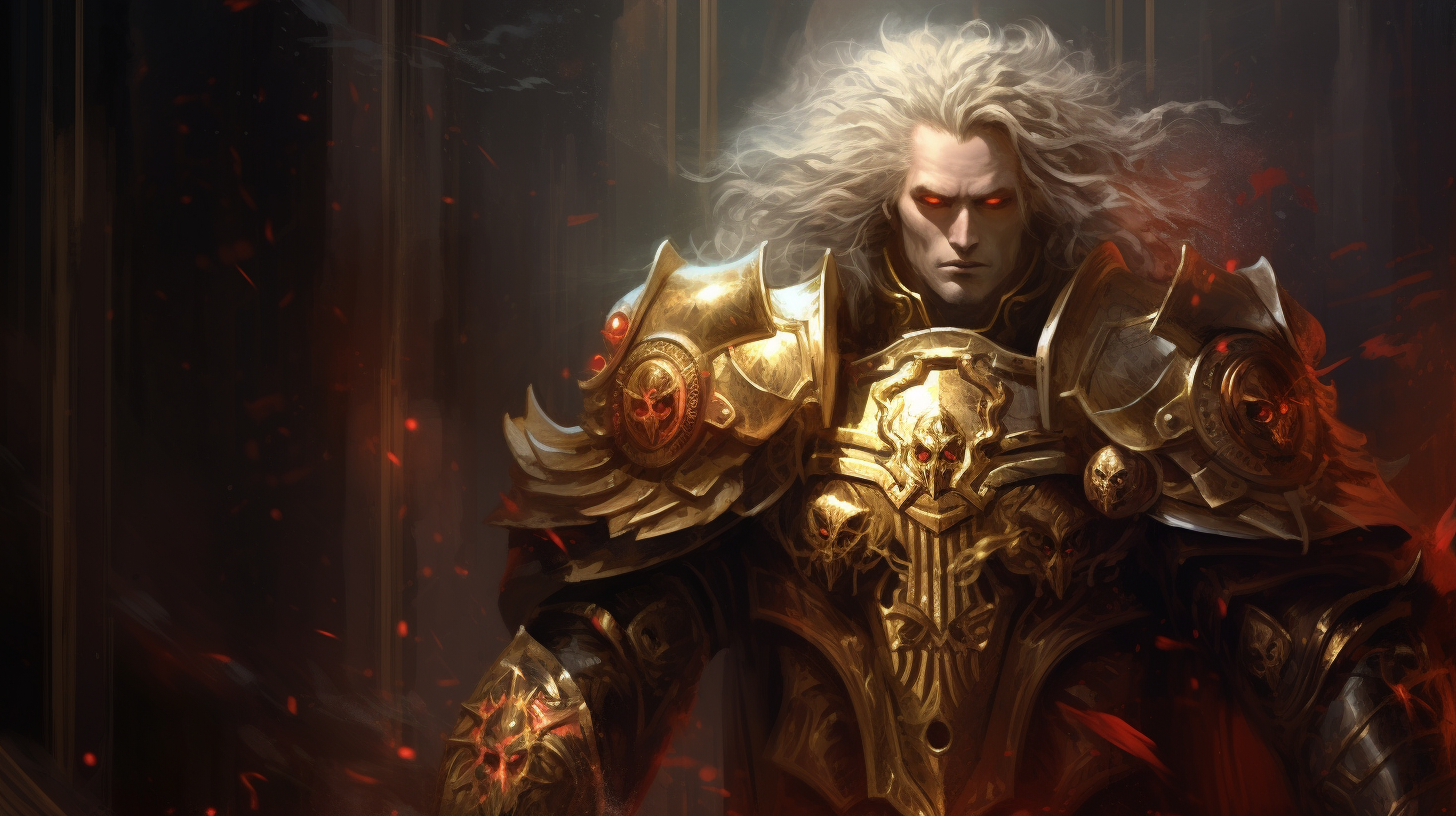
Fulgrim, now a four-armed, serpentine Daemon Prince of Slaanesh, is believed to reside on a Daemon World within the Eye of Terror. During the Drop Site Massacre on Isstvan V, Fulgrim showed remorse for his corruption, but a Greater Daemon of Slaanesh possessed him briefly. Fulgrim later overcame the Daemon, imprisoning it and regaining control of his body, which deepened his commitment to Slaanesh and Chaos.
Before the Horus Heresy ended, Fulgrim ascended to Daemon Prince. His current location is unknown to the Imperium and most of the Emperor's Children Traitor Legion. Since the Great Rift's opening in the Era Indomitus, rumors suggest Fulgrim is active across the galaxy again.
Welcome, lore-lovers, to another deep dive into the grimdark universe of Warhammer 40,000! I'm Liandrug, your guide on this journey through the realms of the fantastic and the macabre. Today, we're peeling back the layers of deception, betrayal, and transformation to uncover the haunting tale of Fulgrim--the Primarch who fell from grace and rose anew as a Daemon Prince of Slaanesh. So grab your bolters and prepare for a warp-spanning odyssey through time and space!
The Chronicle
Like all primarchs, Fulgrim was teleported from Terra as an infant by the Chaos Gods to thwart the Age of the Imperium. His capsule landed on Chemos, a resource-poor Mining World shrouded in perpetual twilight. Settled during the Dark Age of Technology, Chemos was isolated by Warp storms during the Age of Strife, depleting its resources and pushing its people to constant labor for survival. Food scarcity was severe due to disrupted interstellar trade.
Fulgrim's capsule was found by Chemos' planetary police, the Caretakers, who, impressed by the infant's beauty, persuaded the leaders of Callax to spare his life despite the usual execution of orphans. Fulgrim was raised by one of his rescuers.
Named after an ancient deity, Fulgrim became a legend. By half the typical working age, he met adult labor demands and improved Chemos' mining technology, significantly boosting efficiency. By age 15, he ascended to an Executive of Callax, addressing the severe resource shortages.
Under Fulgrim's leadership, engineers revived ancient mining outposts, increasing production and allowing Chemos to trade surplus resources for food. Fulgrim promoted Chemosian art and culture, reviving important aspects of human life long sacrificed for survival.
In 830.M30, Chemos' isolation ended when Stormbird dropships bearing the Imperial Aquila descended from the sky. Fulgrim, stirred by memories, ordered the Caretakers to welcome the visitors. In his quarters, Fulgrim met the Emperor of Mankind and immediately pledged his service.
The Emperor informed Fulgrim about Terra and the Great Crusade to reunite Humanity. Fulgrim returned to Terra and learned that most of the gene-seed for the IIIrd Legion, created from his DNA, had been destroyed. Addressing the 200 surviving Astartes, Fulgrim's inspiring speech led the Emperor to name the IIIrd Legion the "Emperor's Children" and grant them the honor of bearing the Imperial Aquila on their armor.
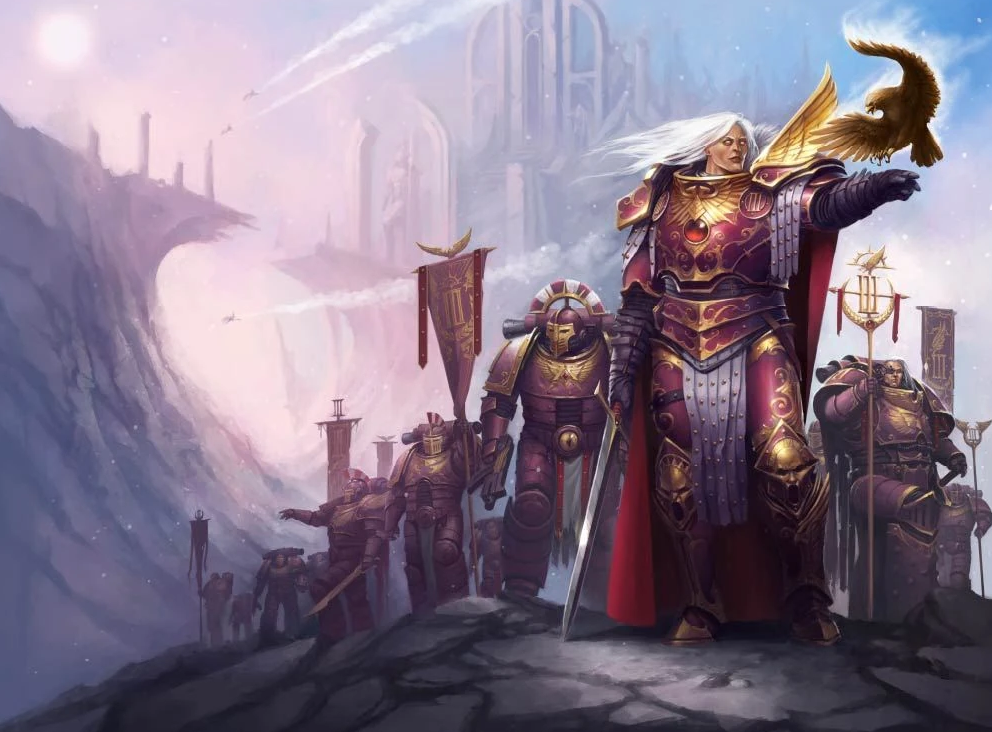
Fulgrim and his Legion were driven to embody the Emperor's ideals of perfection. This pursuit influenced their military tactics and their highly artistic and aesthetic culture. Fulgrim, with his silver hair, wide eyes, melodic voice, and decorated power armor, exemplified this ideal, often wearing intricately embroidered cloaks over his finely crafted armor.
The bond between Primarchs Fulgrim and Ferrus Manus was legendary during the Great Crusade. Their first meeting occurred beneath Mount Narodnya on Terra, where Ferrus Manus, Primarch of the Iron Hands, was working in the forge. Fulgrim, Primarch of the Emperor's Children, arrived with his elite Phoenix Guard. Both Primarchs felt a connection through their shared origins in alchemy and science.
Upon meeting, Ferrus Manus claimed Fulgrim couldn't forge a weapon to match his own liquid metal hands. Fulgrim accepted the challenge, and they toiled for weeks, crafting their weapons amidst the noise of hammers and friendly taunts. After three months, Fulgrim forged the warhammer Forgebreaker, and Ferrus Manus crafted the golden sword Fireblade. Each declared the other's weapon superior, swapped them, and sealed their friendship.
Forgebreaker, with its ebony haft and eagle-shaped head, radiated power and embodied love, honor, loyalty, and vengeance. Only an Astartes could wield it. Ferrus Manus earned the nickname "The Gorgon," initially given by Fulgrim due to his lack of interest in art and culture, in contrast to Fulgrim's love for beauty.
Before we dive deeper, don't forget to smash that like button like a Chaos Lord smashing through the defenses of a loyalist stronghold! Your support helps keep the fires of our lore-fueled crusade burning bright, and who knows? It might even attract the attention of a few benevolent daemonic entities!
When they visited the Imperial Palace, Fulgrim was captivated by the artistic gifts brought by Sanguinius of the Blood Angels. Ferrus Manus, unimpressed, called such things a waste of time. Fulgrim teased him as a "terrible gorgon," solidifying the nickname. Despite their differences, their bond remained strong, rooted in mutual respect and admiration.
Fulgrim was eager to contribute significantly to the Great Crusade but initially commanded a small Legion. The Emperor's Children were placed under the command of Horus and fought alongside his Luna Wolves, leading to a close bond between the two Primarchs. Over several decades, the Emperor's Children grew in number, recruiting from Terra and Chemos. When they reached a sufficient size, Fulgrim was given command of the 28th Expeditionary Fleet and set off on his own conquests, adding many worlds to the Imperium, including the fateful xenos world of Laeran.
Fulgrim first fell from the Emperor's grace on Laeran, the third world his fleet brought to Imperial Compliance. The Laer, serpentine xenos worshippers of Slaanesh, the Chaos God of Pleasure, resisted the Imperium. Fulgrim's fleet conquered Laeran, eradicating the Laer. The Laer had advanced technology and lived on floating coral islands supported by anti-gravity generators.
Unaware of the Slaaneshi corruption, Fulgrim ordered an assault on Laeran. The Emperor's Children discovered a massive temple dedicated to Slaanesh, containing a potent Chaos artefact: a Daemonblade housing a Greater Daemon of Slaanesh. Fulgrim claimed the blade, unknowingly beginning his corruption. The whispers from the daemon within the blade gradually influenced him.
Fulgrim wielded the Daemonblade more frequently, replacing his previous weapon, Fireblade, forged by his brother Ferrus Manus. Influenced by the daemon and persuaded by Horus, who was already corrupted by Chaos, Fulgrim eventually embraced Slaanesh. This path offered him and his Legion a route to the ultimate perfection they craved, free from morality and focused on self-obsession.
During the latter part of the Great Crusade, the Iron Hands Legion encountered the Diasporex, a nomadic, fleet-based civilization composed of both humans and xenos. The Iron Hands, adhering to the Imperial Truth of the Emperor of Mankind, offered the human members of the Diasporex the opportunity to separate from their alien allies and join the Imperium. When the Diasporex declined, the Iron Hands passed judgment, attempting to annihilate them. However, the Diasporex proved highly skilled in naval warfare, evading crucial battles and severely damaging the Iron Hands' Strike Cruiser Ferrum.
The Emperor's Children of the 28th Expeditionary Fleet were called in as reinforcements. A joint strike force of Iron Hands and Emperor's Children launched an all-out assault on the Diasporex. Despite knowing a powerful fleet sought their destruction, the Diasporex refused to leave the sector, relying on hidden solar collector arrays to fuel their vessels. The Imperials targeted these vital fuel stations, drawing the Diasporex fleet into open battle.
During the ensuing massive naval engagement, Fulgrim's personal gunship, the Firebird, came under heavy attack. Ferrus Manus' flagship, the Battle Barge Fist of Iron, rushed to his brother's rescue. To restore his pride, Fulgrim led a shipboarding action where the Emperor's Children wreaked havoc on the Diasporex troops. However, ultimate victory eluded him when a subordinate commander took the enemy ship's bridge.
For months, Fulgrim resented Ferrus Manus' actions. Under the influence of the daemon-possessed Laer blade, Fulgrim misinterpreted Ferrus' selfless act as a slight. He perceived Ferrus' critical comments as undermining jests rather than attempts to puncture his self-importance and restore humility.
The daemon blade's influence twisted Fulgrim's perception, making him see Ferrus' deeds of courage as prideful boasts and rash actions. This growing resentment and misunderstanding contributed to Fulgrim's eventual downfall, as the selfish influence of Chaos claimed the Phoenician's soul.
The Influence of Chaos
Certain members of the Inquisition who have studied the fragmentary Imperial records from this time believe that the Laeran daemon sword began to exert a powerful Chaos influence over Fulgrim. The Emperor's Children forces deployed against the Laer may also have been tainted by their exposure to the concentrated Chaos corruption of that serpentine race, who had fully sworn themselves to the service of Slaanesh. Even while wrestling with his own Chaos taint, the primarch of the Emperor's Children soon found himself at the center of the events that would bring on the Horus Heresy.
The Meeting with Eldrad Ulthran
Fulgrim met with the renowned Asuryani Farseer Eldrad Ulthran of Craftworld Ulthw on the Maiden World of Tarsus, where the Farseer attempted to warn Fulgrim that Horus had been wounded by the Chaos artefact blade known as the Kinebrach Anathame at the hands of Eugen Temba, the Planetary Governor of Davin who had fallen to the influence of the Plague Lord Nurgle. The wounding had allowed the Chaos Gods to gain a purchase on the Warmaster's soul, and he was already turning to their service as he recuperated from the nearly-mortal wound the Kinebrach blade had given him.
Fulgrim reacted with violent outrage at the Farseer's accusations due to his close friendship with his brother Horus, a bond second only to that he shared with Ferrus Manus, the Primarch of the Xth Legion. This outrage was further enhanced by the influence of Fulgrim's daemon blade, which led Fulgrim to launch an unprovoked and furious attack on Eldrad and his retinue alongside his Emperor's Children captains and his personal Phoenix Guard.
In the ensuing battle, the Emperor's Children slew both the revered Asuryani Wraithlord Khiraen Goldhelm and a potent Avatar of Khaine. Eldrad and the other Asuryani troops sorrowfully withdrew, realizing that Chaos had claimed yet another of the Mon-Keigh's primarchs. Yet, they succeeded in killing all of Fulgrim's elite personal Phoenix Guard before their departure.
Believing the Aeldari had proven themselves a treacherous race that sought to divide and conquer the Imperium, Fulgrim, under the increasing influence of the daemon blade, ordered the destruction of several Aeldari Maiden Worlds using Virus Bombs.
Closing Words
And there you have it, lore-lovers! Fulgrim's story is one of decadence, betrayal, and relentless pursuit of perfection. If you enjoyed this journey through the Eye of Terror, be sure to like, share, and subscribe for more deep dives into the dark corners of Warhammer 40K lore. And don't forget to join our Discord community to discuss all things grimdark with fellow enthusiasts. Until next time, stay vigilant, and may the Emperor's light guide you through the darkness!
Part 2
Opening
Greetings, lore-lovers! Welcome back to Liandrug, where we delve into the shadows and secrets of the Warhammer 40,000 universe. In the second part of our Fulgrim saga, we'll explore the tumultuous aftermath of the Horus Heresy and witness the transformation of our tragic Primarch into a Daemon Prince of Slaanesh. Ready your minds for a deep dive into madness and decadence as we continue to unravel the tale of the once-great Fulgrim. Let's dive into the darkness!
The Meeting with Horus
Fulgrim soon met Horus in person after the Aeldari's warning. Instead of seeking an account of his actions, Horus used his immense transhuman charisma to sway Fulgrim to his cause and the service of the Ruinous Powers. Fulgrim's respect for Horus allowed Chaos to find its way into Fulgrim's heart, destroying his loyalty to the Emperor and replacing it with a burning desire to destroy the man he now believed held humanity back from the perfection only the Chaos Gods could provide.
In recognition of his trust in Fulgrim, Horus gifted him the Chaos blade known as the Kinebrach Anathame. Only the two brothers shared the secret of the poisoned blade's true power, blessed by Nurgle, the weapon that had nearly killed Horus on Davin's plague moon.
The Confrontation with Ferrus Manus
Fulgrim was next ordered by Horus to meet with Ferrus Manus, hoping to sway his greatest friend to the side of Horus and the Traitor Legions. Fulgrim sent the bulk of his Legion and the 28th Expeditionary Fleet to meet Horus in the Isstvan System while he aided the Iron Hands' 52nd Expeditionary Fleet in retaking Callinedes IV from Orks. Fulgrim felt he could convince Ferrus of the righteousness of Horus' cause.
The meeting in Ferrus' private inner sanctum on the Battle Barge Fist of Iron ended in violence as Ferrus, outraged at his brothers' betrayal, attacked Fulgrim. Ferrus used his silvery necrodermis hands to destroy Fulgrim's power sword Fireblade, but the explosion knocked him out. Fulgrim intended to kill his brother with Forgebreaker but was unable to despite the daemon's promptings. Instead, he signaled his Phoenix Guard, who beheaded all of Ferrus' Morlocks Terminators. Fulgrim fled in his assault craft, the Firebird, after ordering his flagship, Pride of the Emperor, to fire upon the Iron Hands' fleet, crippling them and allowing the IIIrd Legion to flee into the Warp.
The Corruption of the IIIrd Legion
With their allegiance to Chaos settled, the Emperor's Children's corruption spread quickly. The once-laudable quest for excellence and perfection of the IIIrd Legion became a desire for perfect hedonism and constant, self-absorbed, sensual excess. The Emperor's Children, from Fulgrim to the lowest Astartes, now followed the dictates of Slaanesh, abandoning their loyalty to the Emperor and embracing the ruinous pursuit of ultimate self-obsession.
Before openly launching his rebellion, Horus saw an opportunity to eliminate Loyalist elements within the Astartes Legions under his command. The Imperial Planetary Governor of Isstvan III, Vardus Praal, had been corrupted by Slaanesh, practicing forbidden sorcery. Tasked by the Council of Terra to retake the planet, Horus used this mission to further his own plans.
Although the Sons of Horus, World Eaters, Death Guard, and Emperor's Children had pledged themselves to Chaos, many Loyalist elements remained within these Legions. These were mostly Terran-born Space Marines who had been recruited directly by the Emperor before the Great Crusade's Primarch reunifications.
Horus amassed his troops in the Isstvan System under the guise of putting down a rebellion. After a lengthy bombardment, Horus dispatched all known Loyalist Astartes to the planet, pretending to reclaim it for the Imperium.
As Loyalist forces captured the Choral City, the planetary capital, they were betrayed by a cascade of Life-Eater virus-bombs from Horus' fleet. Loyalist Captain Saul Tarvitz of the Emperor's Children, aboard the Strike Cruiser Andronius, discovered the plot and, with help from Battle-Captain Nathaniel Garro of the Death Guard, warned the Loyalists on the surface of their impending doom. Those who heard the warning took shelter before the virus-bombs struck.
The civilian population received no such warning: 12 billion people died almost instantly as the Life-Eater virus dissolved all organic matter. The psychic shockwave from their mass deaths momentarily obscured the Astronomican.
The virus-bombs failed to kill all Loyalists. In a rage, Angron, Primarch of the World Eaters, led 50 companies in a frenzied ground assault. Horus, forced to adapt, reinforced Angron with troops from the Sons of Horus, Death Guard, and Emperor's Children. Loyalists, led by Captains Tarvitz, Garviel Loken, and Tarik Torgaddon, resisted fiercely.
A contingent of Loyalists, led by Battle-Captain Garro, escaped Isstvan III aboard the Eisenstein, warning Terra of Horus' treachery. On the planet, Loyalists fought against their former comrades for three months, but lack of air support and Titan firepower doomed their cause.
Despite early successes, Loyalists faced overwhelming odds. Captains Ezekyle Abaddon and Horus Aximand of the Sons of Horus confronted their former Mournival brothers, Loken and Torgaddon. Aximand beheaded Torgaddon, but Loken survived the collapse of the building he and Abaddon fought in, witnessing the final orbital bombardment that ended the Loyalists' resistance.
Captain Lucius of the 13th Company, driven by jealousy of Captain Tarvitz, betrayed the Loyalists, seeking favor with Lord Commander Eidolon and Fulgrim. Lucius' treachery, killing many former comrades, secured his place in the Traitor Legion. As Loyalists retreated to their last stronghold, Horus ordered a final orbital bombardment, reducing the Choral City to dust and ending the Loyalists' desperate defense.
If you're enjoying this descent into chaos, give that like button a swift blow like Fulgrim's blade cleaving through an Imperial foe! Your support keeps our lore-thirsty quest alive and helps us spread the dark gospel of Warhammer. Plus, who knows, it might even summon a bit of luck in your next tabletop game!
In the final days of the Great Crusade, Bequa Kynska, a renowned composer from Terra, accompanied the Emperor's Children's 28th Expeditionary Fleet aboard Fulgrim's Battle Barge, Pride of the Emperor. Kynska, seeking new sensations for her music, became a target for Slaaneshi corruption after visiting a temple dedicated to Slaanesh on the xenos world of Laeran. Inspired by her experience, she composed a symphony named the "Maraviglia," which she performed for Fulgrim and the Emperor's Children in the theatre La Fenice.
The Maraviglia's performance was a sorcerous ritual that opened a link between realspace and the Warp, allowing Slaanesh's power to directly affect the audience. The cacophony unleashed by Kynska's new, chaotic instruments caused disorienting and violent reactions. Mutations spread, and uncontrollable emotions led to a violent orgy of hedonism and murder. During the chaos, the music summoned five Lesser Daemons of Slaanesh, who possessed Kynska and her singers, escalating the slaughter.
Some Emperor's Children Astartes, taking up the corrupted instruments, discovered they could unleash destructive sonic power, becoming the first Noise Marines. This event marked their complete surrender to Slaanesh, and they formed the Kakophoni, a new unit under First Captain Julius Kaesoron. The Maraviglia and its aftermath solidified the Emperor's Children's devotion to Slaanesh, symbolizing their fall into hedonistic excess and the corrupting influence of Chaos.
When the Loyalist Salamanders, Raven Guard, and Iron Hands Legions arrived in the Isstvan System to confront Horus and the Traitor Legions on Isstvan V, the Emperor's Children eagerly joined the conflict. Thousands of Drop Pods and Stormbirds were deployed, with Ferrus Manus leading the charge alongside Vulkan and Corvus Corax. Vulkan's Legion attacked the left flank, while Ferrus Manus, with Gabriel Santor and 10 companies of elite Morlock Terminators, struck the center. Corax's Legion hit the right flank. The Traitors faced 30,000 Loyalists against their own 40,000.
The battlefield was a brutal slaughterhouse, with Traitor forces engaging their former brothers in a bitter conflict. Titans of the Dark Mechanicum ravaged the Loyalists, who faced horrific casualties. The Traitors' line was buckling under the Loyalist assault, but the arrival of the second wave of "Loyalist" Legions turned the tide. The Night Lords, Iron Warriors, Word Bearers, and Alpha Legion--secretly Traitorous--arrived fresh and ready. The initial Loyalist Legions, though having secured the Urgall Depression, suffered heavy losses.
Ferrus Manus, consumed by rage and defiance, ignored the advice of Corax and Vulkan. He led a relentless charge against the Traitors, aiming for personal combat with Fulgrim. The battle expanded into one of the largest clashes of the Great Crusade, with over 60,000 Astartes fighting on Isstvan V.
Fulgrim, observing his brother's attack, felt a mixture of admiration and sorrow. Ferrus Manus charged through Traitor defenses, his Terminators advancing with relentless force. Fulgrim watched, knowing their fractured brotherhood would only end in death. As Ferrus and his Morlocks battled the Phoenix Guard, the air was charged with energy, each clash a fierce display of hatred and power. The Primarchs stood poised for their final confrontation, knowing only one would survive.
Ferrus Manus taunted Fulgrim for betraying the Emperor and siding with Horus, believing his brother mad for joining a losing cause. Fulgrim, savoring the final act of betrayal, revealed to Ferrus that it was he who was naive. He pointed out a massive force gathering at the northern edge of the Urgall Depression, indicating that the Loyalists were undone. As the Iron Hands and Raven Guard regrouped, seeking aid and supplies, Horus sprung his trap. A flare shot skyward, signaling the second wave of Traitor Legions--Night Lords, Iron Warriors, Word Bearers, and Alpha Legion--who opened fire on the Loyalists, killing hundreds in moments.
As the Traitor forces unleashed chaos, the Warmaster's troops turned their weapons on the Iron Hands, overwhelming them. Ferrus, enraged, faced Fulgrim in a fierce duel. The two Primarchs clashed with their iconic weapons, Fireblade and Forgebreaker, trading brutal blows. Fulgrim, wielding a daemonically-possessed sword from the Laer temple, fought with a strength fueled by Chaos. Despite Ferrus's valiant efforts, Fulgrim's blade cut deep, and Ferrus fell, decapitated.
As Fulgrim looked at his fallen brother, the weight of his actions and the betrayals leading to this moment hit him with full force. Overcome with grief and confusion, he struggled with the realization of his profound errors. The daemon's whispers promised release from his torment, leading Fulgrim to relinquish control. The Greater Daemon possessed Fulgrim entirely, imprisoning the Primarch's true consciousness within his own mind, symbolically represented by a painting of him in La Fenice, the theatre of the Emperor's Children's flagship, the Pride of the Emperor.
Closing Words
And that's a wrap on Part 2 of Fulgrim's twisted journey, lore-lovers! If you found this chapter as fascinating as the last, don't forget to like, share, and subscribe for more in-depth lore explorations. Join our Discord community to debate, discuss, and delve deeper into the lore with fellow enthusiasts. Until the next chapter, stay curious and may the Emperor watch over you!
Part 3
Opening
Welcome back, lore-lovers, to the final installment of our Fulgrim trilogy! I'm Liandrug, and in this episode, we'll unearth the fate of Fulgrim after his apotheosis and delve into the shocking revelations of his post-Heresy escapades. From the ruins of Isstvan III to the mysterious machinations of Clone Fulgrim, this chapter promises revelations that are as twisted as they are compelling. Prepare for an epic conclusion to our exploration of the Phoenician's dark legacy!
The Chronicle
Following the Traitor victory at Isstvan V, Fulgrim sought a private audience with Horus, presenting the severed head of Ferrus Manus. Horus was initially pleased but soon realized that the figure before him was not truly Fulgrim but a doppelganger. The Warmaster threatened the impostor but relaxed upon seeing that the creature was unarmed and seemingly non-threatening. The being revealed itself as a daemon of Slaanesh, having claimed Fulgrim's body and left the Primarch's consciousness trapped within.
Horus, appalled by the daemon's revelations, chose to keep the creature as an ally for now, resolving to rescue Fulgrim when the time was right. He and the daemon agreed to keep the truth hidden to avoid complications with other Primarchs.
Four days after Isstvan V, Horus gathered the Traitor Primarchs aboard his flagship, the Vengeful Spirit. Present were Fulgrim, Perturabo, Angron, and Lorgar, with Konrad Curze, Mortarion, and Alpharius appearing as holograms and Magnus the Red projecting from afar. Lorgar, fixated on Fulgrim, grew suspicious and accused the figure of being an imposter. Before anyone could react, Lorgar struck the doppelganger with his Crozius, revealing its true nature. The other Primarchs, surprised, prepared to confront the impostor.
Horus attempted to calm Lorgar, who was astonished to learn that Horus was already aware of the deception. Horus dismissed the other Primarchs and faced Lorgar alone. Lorgar, recognizing the daemon within Fulgrim, questioned why Horus protected such a dark secret. Horus explained that he hadn't orchestrated Fulgrim's fate but was managing the aftermath.
Lorgar, disturbed by the daemon's possession of Fulgrim's body, argued that it was a perversion of the natural order, unlike his own Gal Vorbak. Using his psychic abilities, Lorgar held the daemon at bay, threatening to destroy it and banish it back to the Warp. Despite Horus's attempts to restrain him, Lorgar's power prevailed, and the daemon was helpless against his psychic might. Lorgar, changed since Isstvan V, left the council chambers to contemplate the corruption he had witnessed, while Horus reflected on the transformation in his brother.
Lucius had begun to suspect that something was wrong with Fulgrim. The erratic behavior of the Emperor's Children Primarch, his refusal to follow orders, and his violent actions, such as killing Lord Commander Eidolon, troubled him. Lucius noticed a drastic change in Fulgrim's demeanor and skills, particularly in swordsmanship.
His suspicion grew when he observed that Fulgrim was using powerful psychic abilities, which was not typical for the Primarch. Lucius's concerns deepened when he noticed Fulgrim's strange and unsettling behavior, prompting him to investigate further. His investigations led him to La Fenice, the theatre aboard the Emperor's Children's flagship, where he discovered a haunting portrait of Fulgrim.
The portrait seemed to convey a sense of horror and suffering that Lucius realized might indicate that Fulgrim was trapped within it. Determined to free his Primarch, Lucius convened the Brotherhood of the Phoenix, persuading them to capture Fulgrim. After a fierce struggle, they subdued Fulgrim and took him to the Apothecarion for what they believed would be an exorcism.
During the ordeal, it was revealed that the true Fulgrim had indeed been possessed by a daemon. The Primarch had used this time to learn from his captor and had ultimately managed to expel the daemon, taking its place. Fulgrim explained that his erratic behavior was part of a ruse to mislead his enemies and that he had been using the experience to explore Chaos and push the boundaries of sensory experience.
Fulgrim's plan included the acquisition of Prismatica V's crystals to build a city of mirrors dedicated to sensual pleasure and enlightenment. He intended to join forces with Perturabo and the Iron Warriors for this new purpose, guiding his Legion towards a deeper understanding of Chaos and sensory exploration.
As Horus' rebellion continued, the Iron Warriors defeated their nemeses, the Imperial Fists, on the world of Hydra Cordatus. Perturabo, having recently achieved this victory, was informed by Fulgrim of the Emperor's Children that they wished to meet him to discuss an important matter. Perturabo, knowing Fulgrim's penchant for drama, suspected the visit might involve a significant military campaign, possibly related to the impending assault on Mars. While Perturabo planned for this, the Emperor's Children arrived unexpectedly on Hydra Cordatus with a grand display of power, their appearance markedly changed since their alliance with the Warmaster.
Fulgrim met Perturabo in private, presenting an enticing offer: a quest to find the Angel Exterminatus, a legendary xenos weapon hidden within a Warp Storm. Despite Perturabo's suspicion, he was intrigued by the potential of such a powerful weapon and agreed to consider Fulgrim's proposal.
Unbeknownst to them, a group of Loyalist Astartes, survivors from the Drop Site Massacre, was tracking the Traitors. Aboard the Iron Hands' strike cruiser Sisypheum, these Loyalists, including Iron Hands, Salamanders, and a Raven Guard Astartes, had been conducting hit-and-run attacks on Traitor forces. After capturing a Dark Mechanicum cryptographic entity, they were able to decipher Traitor communications and learned of Fulgrim's plan. The Sisypheum, guided by a mysterious Eldar, was heading to intercept the Traitors and thwart their acquisition of the Angel Exterminatus.
The Traitor fleet's destination was the Crone World of Iydris, a lost Eldar world said to be favored by the Eldar Goddess Lileath. Situated at the heart of the Eye of Terror, Iydris had survived the catastrophic events that created the Warp Rift. The Iron Warriors and Emperor's Children aimed to capture the Sepulchre of Isha's Doom, the entryway to the Angel Exterminatus's prison.
Before launching a full assault, the Iron Warriors conducted an orbital bombardment that devastated the surface around the citadel of Amon ny-shak Kaelis, isolating it from the rest of the planet. Following this, a massive invasion force of Space Marines and Imperial Army units began landing on Iydris, setting the stage for the full-scale assault.
Fulgrim observed as the Emperor's Children and Iron Warriors battled Eldar revenants within the Sepulchre of Isha's Doom, at the heart of the citadel of Amon ny-shak Kaelis. The assault commenced despite incomplete fortifications, with the route into the citadel initially unopposed. Perturabo, ever cautious, had his Iron Warriors fortified outside the walls, preparing for any potential counterattack. Fulgrim's forces were divided into various warbands, each led by a captain whose rank was obscured by elaborate armor. As they pressed into the palace's heart, they were unknowingly watched by the Loyalist Astartes from the Sisypheum, who sought another entry point into the sepulchre.
Fulgrim, showing increasing impatience, pushed Perturabo to hurry. Perturabo observed his brother, noting that Fulgrim was sweating light, a sign of some hidden power or strain. Fulgrim's armor strained, and his captains showed similar signs of an unnatural radiance. Perturabo, distrustful and anticipating betrayal, continued towards their goal. As they neared the heart of the sepulchre, the power within Iydris recognized the Slaanesh followers and awoke its Eldar revenants from their slumber.
Enjoying our journey through Fulgrim's dark legacy? Hit that like button as if you're smashing a Chaos cultist's idol! Your support fuels our voyage through the Warhammer universe and might just grant you the favor of the Dark Gods--or at least a good roll in your next game!
The Eldar constructs, once crystalline statues, moved with an unsettling, organic fluidity, attacking the Traitors from all sides. Amidst the chaos, Fulgrim vanished into the green glow emanating from the chamber's center. Perturabo followed, discovering a hollow world with a central void and a blazing jade light. Fulgrim revealed that there was no Angel Exterminatus--Fulgrim himself was to become the weapon. Perturabo, dismayed by his brother's delusions, prepared to strike him down. Fulgrim's dark incantation weakened Perturabo, who struggled to stand.
Fulgrim had previously gifted Perturabo a cloak with a maugetar stone, which had been draining Perturabo's strength. With Perturabo's life force siphoned off, Fulgrim's transformation began. Fulgrim's form, burning with radiant energy, was reshaped into a Daemon Prince. As the transformation reached its climax, Perturabo, his strength renewed, hurled the maugetar stone into the abyss. A violent explosion erupted as Fulgrim's mortal shell was destroyed, and from the incandescent light emerged the newly ascended Daemon Prince, Fulgrim.
The chamber was filled with a blinding light as Fulgrim ascended into Chaos. The surviving Astartes witnessed the horrifying birth of a new Daemon Prince. Perturabo, witnessing the transformation, was filled with despair as Fulgrim's physical form was remade into something both majestic and terrifying. As Fulgrim and his Emperor's Children vanished in a flare of energy, Iydris began to collapse. Perturabo allowed the Iron Hands to retreat and led his own forces out of the crumbling citadel.
Back aboard the Iron Blood, Perturabo watched as the Eye of Terror's grip tightened, consuming the Iron Warriors' fleet. Determined, Perturabo resolved to move forward, despite the apparent suicide mission of plunging into the black hole's heart. His commanders, though skeptical, followed his orders, and the Iron Warriors fleet ventured into the Eye of Terror.
In the aftermath of the Isstvan V massacre, Horus' rebellion engulfed the galaxy in the Horus Heresy. By the final Battle of Terra, the Emperor's Children had become grotesque shadows of their former selves, wholly corrupted by Slaanesh. While other Traitor Legions assaulted the Imperial Palace, the Emperor's Children unleashed their depravity upon Terra's citizens, engaging in a horrifying spree of hedonism, terror, and slaughter. Billions of Terrans were subjected to unspeakable horrors, used as test subjects, sacrifices, or simply murdered to fuel the Traitors' insatiable desires.
Isolation on Callax
After the defeat of the Traitor Legions at the Siege of Terra, the Emperor's Children became a shadow of their former selves, their deeds largely obscured from Imperial scholars. In the wake of Horus's death aboard the Vengeful Spirit, the Emperor's Children, like other Traitor Legions, fled into the Eye of Terror, leaving a trail of devastation behind them. Their once-grand aspirations gave way to a grim existence of raiding and internal strife, culminating in the Legion Wars. These conflicts shattered their unity and reduced them to warring warbands, each one vying for dominance.
In the aftermath, the Emperor's Children dwindled into a rare and dangerous presence in the galaxy. Their penchant for taking prisoners and their horrifying practices rendered them particularly feared and reviled. The fate of their Primarch, Fulgrim, remains one of the greatest mysteries. Having achieved apotheosis as a Daemon Prince of Slaanesh, Fulgrim isolated himself on a daemon world within the Eye of Terror, which he renamed Callax in homage to his lost homeworld of Chemos.
On Callax, Fulgrim recreated his homeworld and relived the battles that once unified Chemos. Driven by a relentless pursuit of perfection, he repeatedly staged these battles, experimenting with different strategies and outcomes, sometimes even allowing his enemies to win, all in an effort to achieve the perfect victory and rewrite his history.
Despite the galaxy's efforts to find Callax, only a few have managed to locate it, often invited by its corrupt master or simply lost in the attempt.
Battle of Thessala
Following the Horus Heresy, Fulgrim was last seen in realspace at the Battle of Thessala in 121.M31, where he confronted Roboute Guilliman, the Primarch of the Ultramarines. Fulgrim, using his Daemonic senses, exploited a previously unnoticed vulnerability left by Kor Phaeron's Athame blade and mortally wounded Guilliman with a toxic blade. Guilliman was placed into stasis and taken to Macragge, where he became a focal point of Imperial devotion until his resurrection in 999.M41. Meanwhile, Fulgrim retreated into the Warp, disappearing from sight.
The Second Death of Isstvan III
Isstvan III, once the site of the Isstvan III Atrocity, had become a dead world over thousands of Terran years. However, one surviving Loyalist Astartes, Ancient Rylanor, remained hidden in a collapsed hangar beneath the Precentor's Palace. Having discovered an unexploded Virus Bomb, Rylanor, driven mad by time, crafted a beacon to lure Fulgrim back to the planet.
The beacon attracted not only Fulgrim but also a group of Thousand Sons from the Planet of the Sorcerers. Fulgrim, now a Daemon Prince, descended upon the world, where Rylanor detonated the Virus Bomb in a desperate attempt to kill him. One of the Thousand Sons, a Raptora Cult member, used a kine shield to contain the blast, but another, Vistario, dropped the shield in disgust at what Fulgrim had become. The Virus Bomb's effect was swift and total, burning all life from Isstvan III once more.
Yet, Fulgrim, empowered by the dark energies of the Warp, was reborn from the ashes, his form reconstituted but his soul deeply scarred. The death of Isstvan III had failed to end him, and he remained a twisted echo of his former self, marked by the denial of his lost grandeur.
Cloning
Before the 41st Millennium, Fabius Bile succeeded in creating a true clone of Fulgrim. Unlike previous attempts, this clone was an exact replica of Fulgrim before his fall to Chaos. This version of Fulgrim retained the memories of the Great Crusade and the Horus Heresy, expressing deep regret for his past actions and vowing to atone for his sins. However, Bile, fearing the potential for the clone to repeat his predecessor's mistakes, betrayed him to Necron Overlord Trazyn the Infinite.
The cloned Fulgrim was added to Trazyn's collection of historical figures on the Tomb World of Solemnace. Despite his apparent remorse, Bile's fear that the clone might ultimately replicate the mistakes of the original Fulgrim remained. The cloned Primarch, now a part of Necron history, stands as a haunting reminder of both the potential for redemption and the persistence of past failings.
Closing Words
And there you have it, lore-lovers! Fulgrim's story is one of decadence, betrayal, and relentless pursuit of perfection. If you enjoyed this journey through the Eye of Terror, be sure to like, share, and subscribe for more deep dives into the dark corners of Warhammer 40K lore. And don't forget to join our Discord community to discuss all things grimdark with fellow enthusiasts. Until next time, stay vigilant, and may the Emperor's light guide you through the darkness!
Back to Home