


Companion article
Story breakdown and lore notes
The video above is the main focus of this page. The written companion, supporting images, and lore breakdown continue below.
Opening
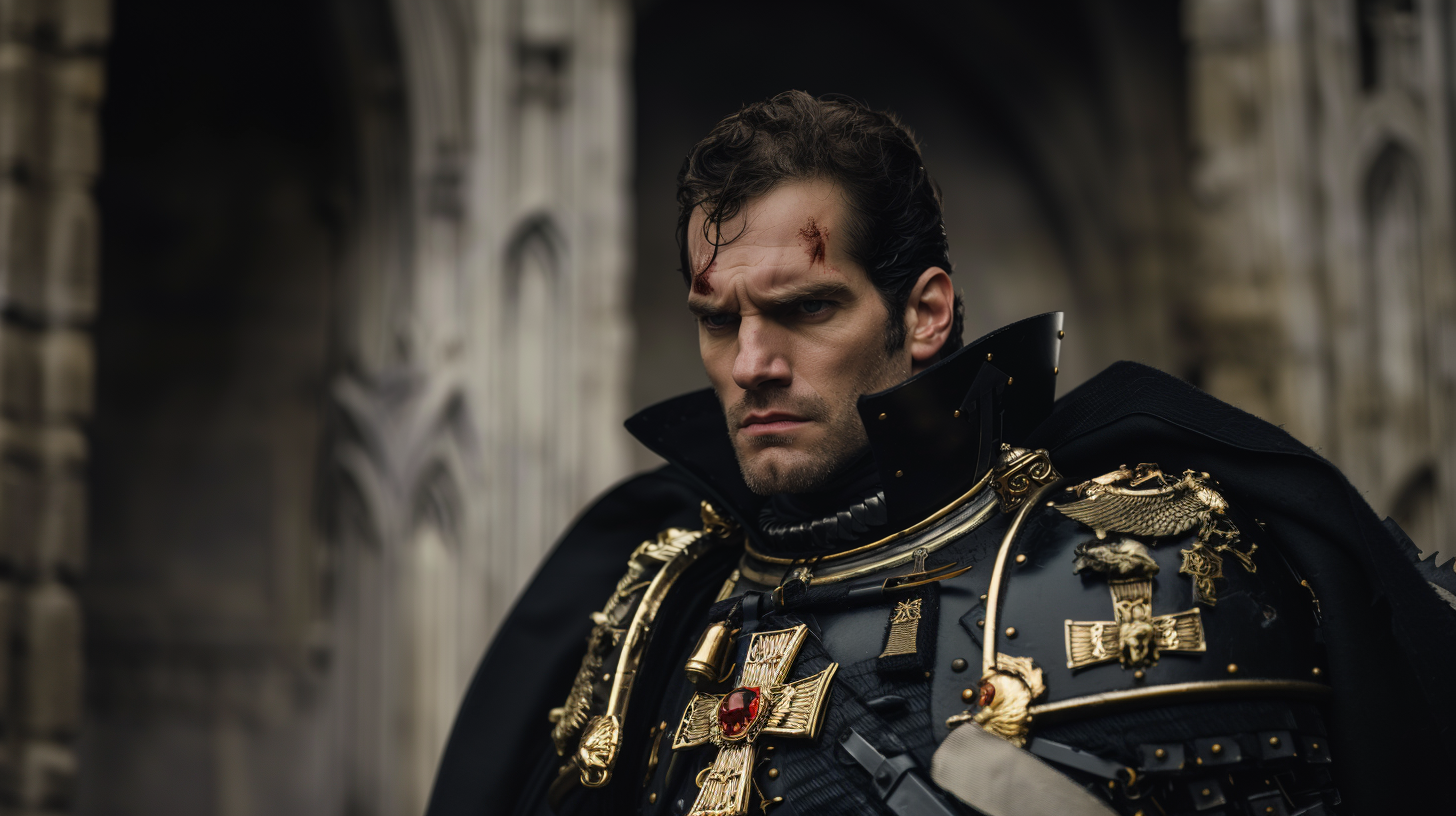
In fact, Eisenhorn has been officially labeled a Traitor by the Inquisition on at least two occasions. Despite these accusations, he managed to prove himself a righteous servant of the Emperor of Mankind each time.
Join me, Liandrug, as we explore the highs, the lows, and the ultimate legacy of Gregor Eisenhorn.
The Chronicle
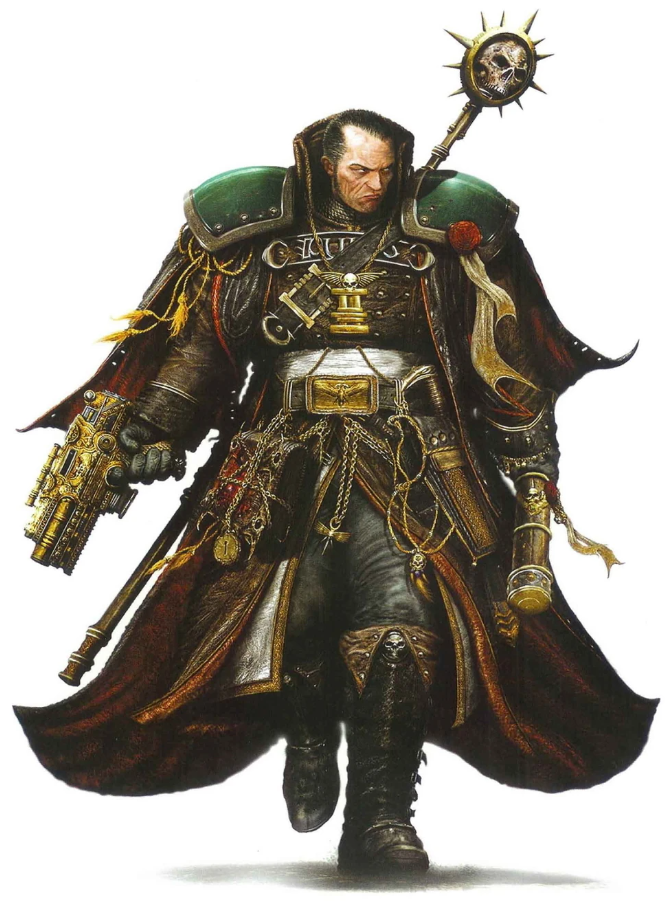
Born in 198.M41 on DeKere's World, Gregor Eisenhorn's life took a dramatic turn when he was taken by the Black Ships at an early age. Over time, he became an Acolyte of Inquisitor Hapshant. Studying alongside fellow apprentice Titus Endor, Eisenhorn's talents and dedication were evident, and he was elevated to the rank of full Inquisitor in 222.M41 at the remarkably young age of 24. His first major success came with the persecution of the heretic Lemete Syre.
Eisenhorn's career was marked by stability and competence, but everything began to change in 240.M41. During this pivotal year, he successfully ended the reign of terror wrought by the mass-murderer Murdin Eyeclone. This investigation was significant not only because it brought Godwyn Fischig and Alizebeth Bequin into his service as Acolytes but also because it set him on a path to pursue both Pontius Glaw and the elusive Necroteuch.
Following leads from the Eyeclone investigation, Gregor Eisenhorn found himself entangled with a heretical cabal on the world of Gudrun. His involvement with this cabal led to a dangerous encounter where he was briefly captured and tortured by one of its members, Gorgone Locke. The cabal was eventually dismantled through a full Inquisitorial purge led by Inquisitor Voke. During this purge, Eisenhorn managed to recover a device known as the Pontius from the cabal.
This device turned out to be of great significance, as it held the encoded brain-engrams of the notorious and long-dead Heretic Pontius Glaw. One of the cabal's plans had involved arranging Glaw's resurrection. Eisenhorn kept Pontius Glaw captive, subjecting him to regular interrogations. Ultimately, Eisenhorn decided to have the Pontius device incarcerated by Magos Bure of the Adeptus Mechanicus, a choice that would profoundly impact his future.
Pursuing further leads from the cabal purge, Gregor Eisenhorn embarked on one of his most renowned investigations: the affair of the Necroteuch, a tome of Chaos knowledge. He tracked the remnants of the heretical Gudrun cabal to a colony world inhabited by the xenos Saruthi. The Saruthi had obtained a copy of the Necroteuch and had translated it into their own language, resulting in two versions of the Chaos tome and a translating tool.
Eisenhorn quickly located and destroyed the human Necroteuch written in High Gothic. This act was controversial; some Radical Inquisitors considered it heretical and condemned Eisenhorn. However, the majority of the local Inquisitorial conclave, which was dominated by Puritans, supported his decision to burn the tome, outvoting the Radicals.
As a result, Eisenhorn was spared from censure and played a key role in planning a raid on the Saruthi homeworld, where the remaining tainted items were destroyed. During this attack, Eisenhorn encountered Cherubael for the first time, a powerful Daemonhost who would go on to haunt Eisenhorn and the Imperium in future endeavors.
In the year 241.M41, Gregor Eisenhorn found himself investigating a series of ritual murders on the world of Sameter. Initially, he suspected these killings to be the work of a Chaos Cult. However, he soon uncovered that the perpetrators were actually former soldiers of the Astra Militarum. These ex-soldiers of the Sameter 9th Infantry Regiment had been driven mad by the horrors they had witnessed in war and had turned to ritually killing ordinary citizens.
With the support of the local Adeptus Arbites Arbitrators, Eisenhorn cornered and eliminated the fanatics in an abandoned, decaying building. During the ensuing firefight, Eisenhorn lost his left hand to a skilled former-sharpshooter. Although offered a bionic prosthetic, he declined and managed with a fused stump until he could have a vat-grown hand grafted on two years later.
In 312.M41, tragedy struck when Eisenhorn's best friend and Acolyte, Midas Betancore, was killed by the Heretic Fayde Thuring during an investigation. Thuring escaped, and Eisenhorn vowed to keep a watchful eye on Midas' infant daughter, Medea. Years later, when she came of age, Medea followed in her father's footsteps and joined Eisenhorn's retinue as his pilot.
Fast forward twenty-six Terran years to 338.M41, and Eisenhorn began the investigation that would cement his fame across the Imperium: the elimination of the Heretic Inquisitor Quixos. This investigation unfolded in the aftermath of the disaster of the Thracian Primaris Triumph, where Eisenhorn's Interrogator, Gideon Ravenor, was grievously injured. The atrocity appeared to have been orchestrated to free several Alpha Plus-class rogue psykers from Imperial detention, setting the stage for one of Eisenhorn's most pivotal missions.
Eisenhorn's investigation led him to the world of Eechan, where he and his team, disguised as mutants, uncovered a disturbing revelation: there was Inquisitorial collusion in the scheme that had freed the rogue psykers. This was evidenced by the presence of Inquisitor Lyko, who was found in the company of the Daemonhost Cherubael. The reappearance of Cherubael shifted Eisenhorn's focus onto the creature, which guided him to the Fortress World of Cadia. There, he encountered another Daemonhost, Prophaniti, and discovered connections between these Daemonhosts and the missing Radical Inquisitor Quixos.
However, Eisenhorn's progress was abruptly halted when he was arrested by Inquisitor Osma on charges of allegedly consorting with daemons. After managing to escape, he was declared an outcast by the Inquisition, forcing him to continue his investigation as a rogue. Eisenhorn sought refuge with his Adeptus Mechanicus ally, Magos Bure, on the world of Cinchare. During this time, he consulted with his prisoner, Pontius Glaw, and managed to dismantle a Chaos Cult on the planet, acquiring master-crafted Force Weapons in the process.
Determined to bring Quixos to justice, Eisenhorn assembled a small strike team consisting of three other Inquisitors. Together, they tracked down and confronted the renegade Inquisitor Quixos. In the climactic encounter, Eisenhorn personally killed Quixos, seized his heretical book, the Malus Codicium, and banished both Prophaniti and Cherubael to the Warp. At the conclusion of the investigation, Eisenhorn was exonerated of all charges.
In 345.M41, Eisenhorn successfully summoned the daemon Cherubael in secret, trapping him in the physical universe for interrogation and study. Ten years later, in 355.M41, he dealt with a minor Warp incursion of daemons on Gudrun, showcasing his continued vigilance and commitment to his duties.
In 386.M41, Gregor Eisenhorn finally avenged the death of his friend and Acolyte, Midas Betancore, by killing the Heretic Fayde Thuring. However, this victory came at a tremendous cost. The battle claimed the lives of several of Eisenhorn's associates, left Bequin in a coma, destroyed his personal starship and gun-cutter, and forced him to ally with the daemon Cherubael. To control Cherubael, Eisenhorn resorted to sacrificing the nave Puritan Inquisitor Bastian Verveuk in an impromptu Chaos ritual, marking a significant step on his path to damnation.
Shortly after these events, Eisenhorn was targeted in a meticulously planned attack by Pontius Glaw, who had escaped Inquisitorial captivity and sought revenge. Eisenhorn's life was shattered: his career was ruined, he was once again declared an outcast by Inquisitors Osma and Heldane, his body was broken, and much of his retinue was killed.
Despite the dire circumstances, Eisenhorn managed to call upon his former pupil, Gideon Ravenor, now a full Inquisitor. With Ravenor's help, Eisenhorn tracked down and finally eliminated Pontius Glaw. However, the ordeal profoundly impacted him, breaking down his resistance to using Radical methods in his fight against Chaos and the Imperium's enemies. Consequently, he began traveling with Cherubael as his constant companion.
Following the Pontius Affair, Eisenhorn largely vanished from the public eye, despite his outcast status being rescinded once more by the Inquisition. He reappeared only briefly over the years, to recruit new Acolytes or confer with former associates. Notably, he warned Gideon Ravenor about the intentions of the Chaos Cult known as the Divine Fratery. Later members of the cult speculated that Eisenhorn might have died fighting their followers, as he was inside a building they bombed and subsequently vanished from their psychic foresight. The truth of Eisenhorn's fate remains uncertain, leaving his death open to dispute.
Closing Words
And there you have it, lore lovers, the epic tale of Inquisitor Eisenhorn, a narrative steeped in tragedy, sacrifice, and the unyielding pursuit of justice. If you enjoyed this journey through the Warhammer 40,000 universe, don't forget to like, share, and subscribe to Liandrug for more immersive lore explorations. Join our Discord community for engaging discussions on all things Warhammer and beyond. Until next time, may the Emperor protect you, and the light of knowledge guide your way in the darkness of the 41st millennium. See you soon!
Back to Home