


Companion article
Story breakdown and lore notes
The video above is the main focus of this page. The written companion, supporting images, and lore breakdown continue below.
Opening
Appearance, powers and wargear
Inquisitor Eisenhorn possesses formidable natural willpower and psychic abilities as an Imperial Sanctioned Psyker. His telepathic talents are particularly notable, often channeled through his voice to compel obedience from individuals or crowds alike. This ability allows him to exert influence over others, a potent tool in his arsenal.
Physically, Eisenhorn is characterized by his crude augmetic assist system, prominently visible from the back of his head and encasing his lower limbs. This cybernetic enhancement, hastily installed during the tumultuous events of the Pontius Affair, has become a permanent fixture. While it affords him reasonable mobility, he relies on a swordstick for balance.
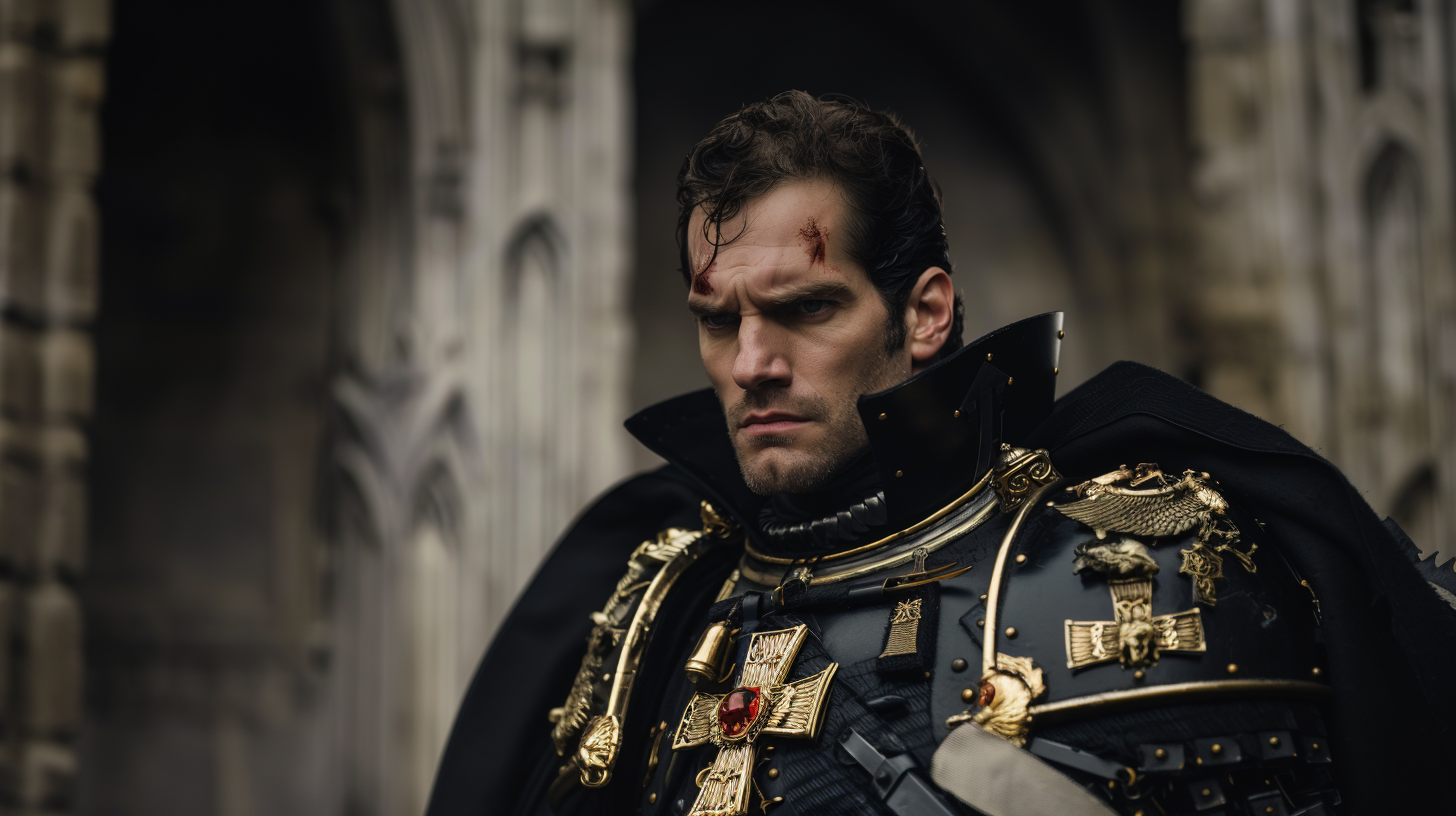
Despite being several Terran centuries old, Eisenhorn appears only roughly middle-aged due to rejuvenation treatments administered by the Inquisition. His face bears the scars of torture inflicted by Gorgone Locke, which irreparably damaged many of his facial nerves. Consequently, he exhibits limited facial expressions and is unable to smile.
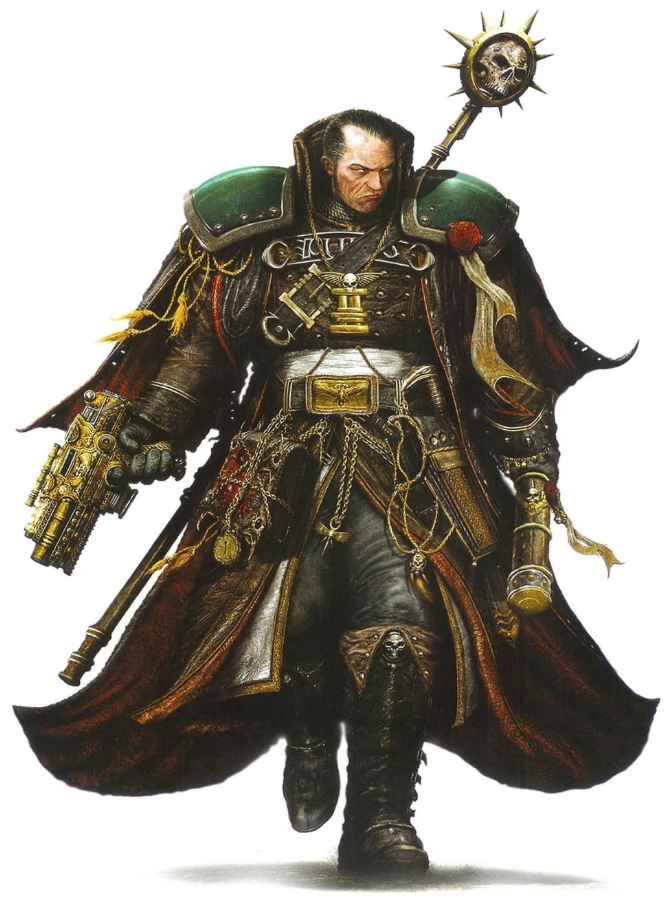
Once dark-haired and clean-shaven, Eisenhorn now maintains a shaved head, a necessity since accepting his augmetic rig. He typically dresses in somber attire: dark grey or black suits under long, high-collared coats in blue or black. His sword, now fashioned into a sword-stick for practicality, is sheathed at his hip. Additionally, his sidearm is holstered under his left shoulder, kept accessible beneath his coat.
Inquisitor Eisenhorn often keeps his Inquisitorial Rosette tucked away in an inside pocket, preferring to downplay his official status. However, there are times when he chooses to prominently display his authority. On these occasions, he dresses more ornately, incorporating colorful elements into his usual attire of suits and long coats. His Inquisitorial Rosette takes pride of place on the front of his jacket, alongside other Imperial symbols and honors he has earned.
During the early part of his career, Eisenhorn wielded a distinctive Power Sword with a blade made entirely of pure energy, a rare and formidable weapon blessed by the Provost of Inx. This antique blade was both graceful and deadly. Alongside this remarkable sword, Eisenhorn carried a standard sidearm: an Imperial Naval Pattern Scipio Stub Pistol. This pistol, originally plain and utilitarian, was personalized by Lores Vibben, an ex-ganger who served as Eisenhorn's bodyguard and aide. Vibben adorned the pistol with ivory grips bearing an intricately etched design of an entwined skull and rose, with carmine gems symbolizing blood droplets from the rose's thorns.
Initially hesitant about the customization, Eisenhorn later recognized it as a mark of honor from Vibben. When Vibben was killed by agents of Murdin Eyeclone, Eisenhorn ensured that the pistol she had altered was used to execute Eyeclone, and he buried it with her in tribute.
Following these events, Eisenhorn's favored sidearm became a heavily customized Bolt Pistol gifted to him by a Librarian of the Ordo Xenos Deathwatch Space Marines. Crafted from green-hued chased steel and designed to be compact yet powerful, it featured a magazine housing in the handgrip for efficiency in combat. Regrettably, this cherished weapon was lost during the Quixos investigation and was never replaced with another preferred sidearm, marking the end of an era for Eisenhorn's iconic arsenal.
After the destruction of his Power Sword in battle with Cherubael, Gregor Eisenhorn turned to Magos Bure for two formidable Force Weapons: a Force Staff crowned with a psychic lodestone shaped like Eisenhorn's own skull, and a Force Sword named Barbariaster. The latter was originally wielded by Arianhrod Esw Sweydyr, one of Eisenhorn's deceased retainers, and had been meticulously crafted with over 900 folds and potent pentagrammatic wards. Originally a long, double-handed sabre-like weapon, Barbariaster was reforged into a single-handed sword after being damaged in a confrontation with the rogue Inquisitor Quixos. Eisenhorn carries his Force Staff slung across his back when it's not in use.
Eisenhorn often speaks of Barbariaster as if the sword has a mind of its own, demonstrating capabilities beyond his own understanding on occasion. This has led to speculation that the sword may be host to a Warp entity. Despite his Puritan beliefs, Eisenhorn never questioned this phenomenon.
Another significant possession of Eisenhorn's was the Malus Codicium, a forbidden grimoire he acquired from Quixos' corpse. This cursed book contained powerful sorcerous rituals, including the creation of Daemonhosts, undead minions, and Warp vortexes capable of planetary devastation. Over time, Eisenhorn mastered these dark arts from the book, despite growing suspicions that the Codicium possessed a consciousness of its own, drawing him closer to moral ambiguity.
During his climactic showdown with the Arch-heretic Pontius Glaw, Eisenhorn destroyed the Malus Codicium as a diversion. However, he had already memorized much of its contents, leveraging this knowledge to control Cherubael and combat the forces of Chaos.
Eisenhorn's gun-cutter served as his most formidable conventional weapon, a personal spacecraft equipped for atmospheric flight and armed with multiple autocannon turrets. It provided both mobility and firepower for his missions, accommodating cabins, crew quarters, and a spacious cargo deck.
Additionally, Eisenhorn and his retinue utilized Glossia, a coded language he devised at the age of 32 standard years. Evolving organically over time with contributions from his Acolytes, Glossia facilitated secure communication among his team during their operations across the Imperium.
Another considerable aptitude Inquisitor Eisenhorn has is the ability to gather people around him, people that helped him in the rise to prominence, Eisenhorn was able to establish a significant organization of Acolytes and retainers early in his career. Starting with just a few hired individuals, Eisenhorn gradually expanded his ranks to encompass dozens of loyal followers, among them a unique group known as the Distaff, who were Psychic Blanks.
This expansive network, spanning across the stars, was tragically dismantled by the manipulations of Pontius Glaw. Glaw orchestrated events that led to the demise of most of Eisenhorn's retinue, leaving Eisenhorn himself missing by the conclusion of the Pontius affair. Those who survived this ordeal found refuge and continued their service under the command of Inquisitor Gideon Ravenor.
Following these devastating losses, Eisenhorn refrained from actively recruiting new servants and Acolytes for some time, relying primarily on the daemon Cherubael as a companion. Eventually, however, he began to assemble a new retinue around himself once more, resuming his role as a formidable force within the Inquisition.
Closing Words
And there you have it, lore aficionados! Inquisitor Eisenhorn, a paragon of strength and resolve in the Warhammer 40,000 universe, wielding his iconic Force Staff and a legacy of psychic prowess. If you found this exploration of Eisenhorn's abilities and wargear fascinating, don't forget to like, share, and subscribe to Liandrug for more deep dives into the lore of Warhammer 40,000. Join our Discord community for engaging discussions and stay updated on all things Eisenhorn and beyond. Until next time, may the Emperor guide your path through the darkness of the 41st millennium. See you in the next episode!
Back to Home