


Companion article
Story breakdown and lore notes
The video above is the main focus of this page. The written companion, supporting images, and lore breakdown continue below.
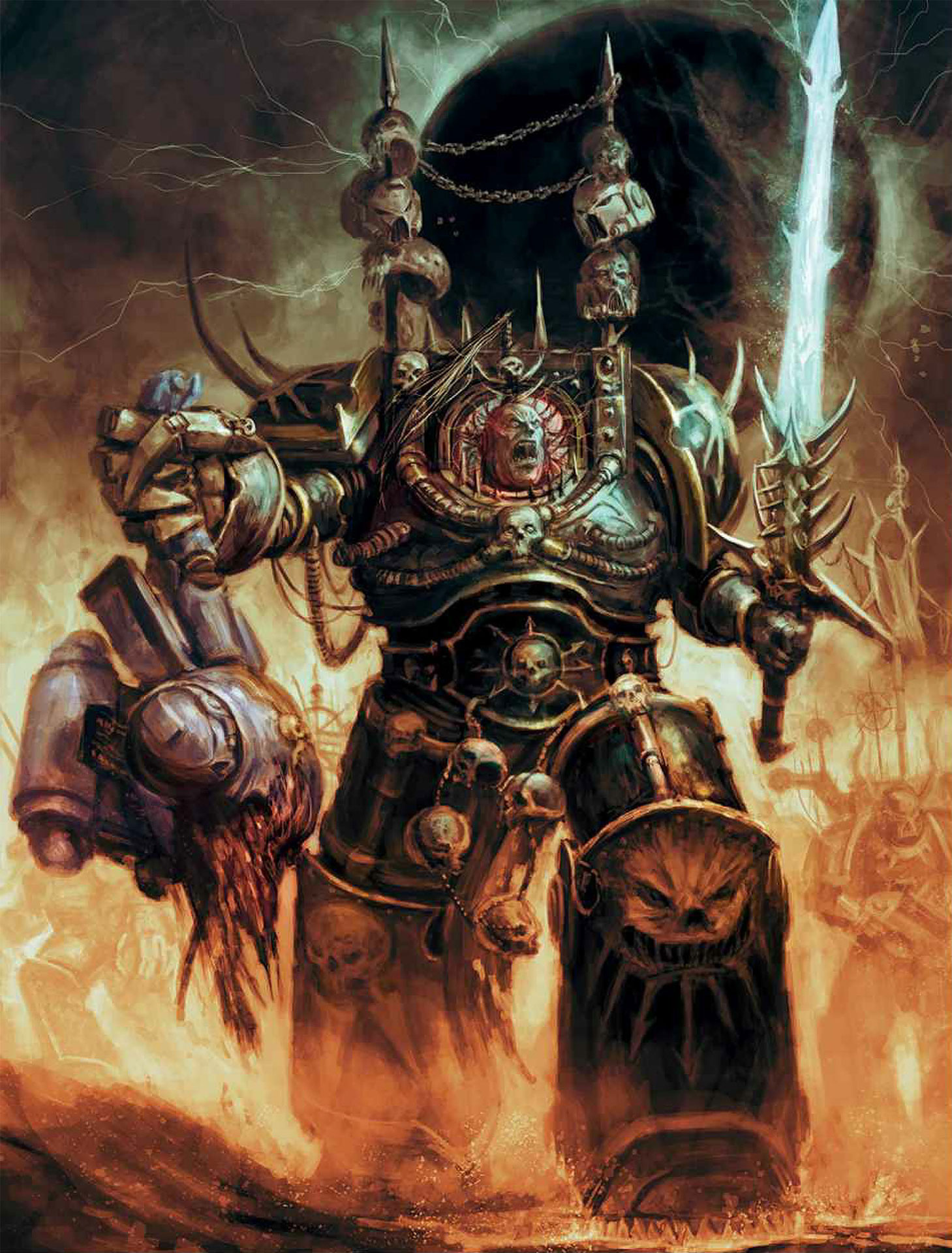
The First Black Crusade
For centuries, the Imperium told itself a comforting lie. Horus was dead, the traitors were broken, and the Eye of Terror was little more than a prison for a failed age. Then, in 781.M31, Abaddon returned.
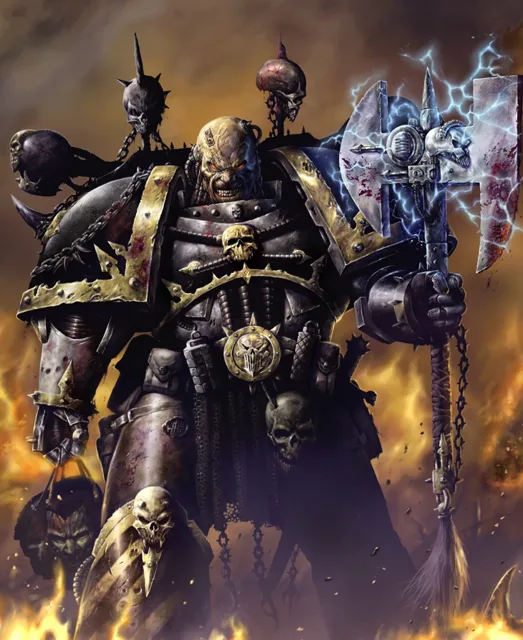
Nearly five centuries after the Siege of Terra, the son of Horus emerged from the Eye at the head of a new Legion clad in black. Not the black of grief, but of judgement. The Black Legion had come, and with it began a new phase of the Long War. Through threats, bargains, conquest, and raw strength, Abaddon forced warbands, renegades, daemons, and fallen champions beneath one banner. Worlds near the Eye burned, populations vanished into chains, and fortress systems trembled. Yet even in those early invasions one truth stood out: Cadia endured.
That first invasion was more than another raid from the Warp. It was a declaration that Abaddon was no longer a survivor from Horus' rebellion. He was building something new: a dominion forged from fear, discipline, hatred, and ambition. He had taken the broken remnants of defeat and turned them into a weapon that could strike the Imperium again and again across the millennia.
Drach'nyen and the Shape of the Long War
While his warriors drowned worlds in blood, Abaddon pursued another goal in secret. Guided by sorcerers and dark bargains, he traveled into hidden places of the Warp and reached the Tower of Silence on Uralan, a place whispered of in daemonic lore as a vault of forbidden truths. There, beyond shifting halls and soul-rending guardians, he claimed Drach'nyen.
The daemon sword was not simply a weapon. It was terror given edge, murder given form, and a shard of the Warp bound to Abaddon's will. With Drach'nyen in hand, his legend changed. He was no longer merely the heir to a failed rebellion. He had become a warlord armed by powers older and darker than Imperial memory.
From that point onward, the Black Crusades became the rhythm of the Long War. They were never random invasions, no matter how Imperial records described them. Each crusade seized a relic, tested a weakness, destroyed a future obstacle, or positioned Abaddon one step closer to his greater design. He did not measure victory the way the Imperium did. He was not trying to hold ground like a loyal commander. He was carving a path toward Terra, one calculated wound at a time.
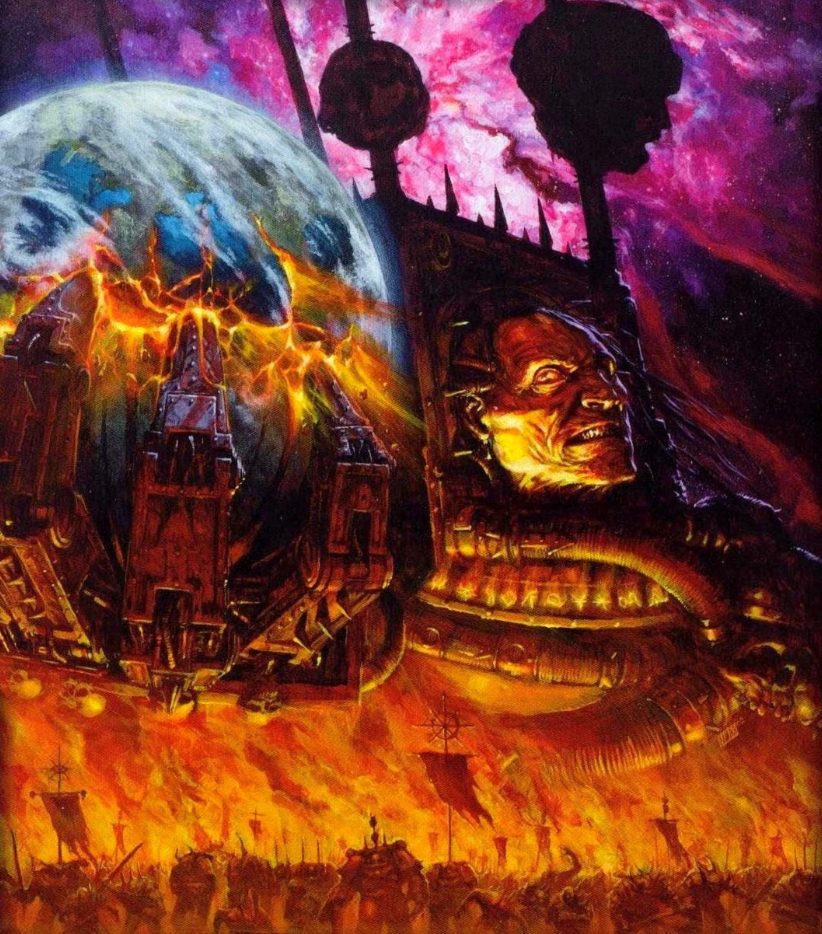
The Twelfth Black Crusade
That hidden design became impossible to ignore during the Gothic War, remembered as the Twelfth Black Crusade. To the Imperium, it seemed that Abaddon had unleashed a monstrous superweapon: the Planet Killer, an engine of annihilation capable of reducing whole worlds to ruin. But the Planet Killer was only part of the deception.
Abaddon's real quarry was older and far more dangerous. He sought the Blackstone Fortresses, ancient star-borne weapons whose true nature the Imperium barely understood. In the confusion of the war, he came close to claiming all of them, and only a desperate alliance between the Imperium and the Aeldari denied him total victory. Even then, partial success was enough. Abaddon escaped with two of the Fortresses, and the galaxy would later learn that he never needed perfect wins to reshape history in his favour.
By then, the Black Legion had become exactly what he wanted: not a relic of the Heresy, but the greatest host of traitors ever assembled in the Eye of Terror. Unlike many champions of Chaos, Abaddon refused to lose himself entirely to worship or madness. The gods offered him apotheosis, but he would not kneel so fully that his war ceased to be his own. He would use the gods, bargain with them, and bleed for them when necessary, but he would not become their puppet.
If you are enjoying this descent into Warhammer 40,000 lore, take a moment to like the video and subscribe to Liandrug. It helps the channel grow and makes more deep-dive stories like this possible.
The Thirteenth Black Crusade
At the end of the 41st Millennium, Abaddon unleashed the Thirteenth Black Crusade. This was not another raid from the Eye. It was the strike toward the heart. He spent decades preparing it, gathering warbands, summoning daemons, binding allies, and making bargains with monsters and Primarchs alike. Mortarion was drawn in. The Thousand Sons lent their Rubricae. Champions of Khorne were broken into obedience or won through slaughter. Fulgrim was promised his share. Abaddon did what no other Chaos warlord had managed on such a scale: he united the nightmare.
And when the crusade came, it came for Cadia. Cadia was not just another fortress world. It was the gatekeeper before the Eye of Terror, the stable passage between the madness of the Warp and the vulnerable worlds beyond. For ten thousand years it had stood watch. If Cadia held, Chaos was contained. If Cadia fell, the road into Imperial space would open wider than it ever had since the Heresy.
The war that followed was apocalyptic. Cadia became a world of trenches, orbital bombardment, daemonic manifestations, and impossible resistance. Lord Castellan Ursarkar Creed and the Cadian defenders refused to bend even as the storm closed around them. But Abaddon had prepared for more than a siege. His Crimson Path was built on metaphysical collapse as much as military conquest. Enough bloodshed, enough daemonic pressure, and enough destruction would break the ancient pylons that had long helped keep the Warp at bay.
Cadia Breaks, the Great Rift Opens
In the end, Cadia broke. When resistance still refused to die, Abaddon turned ruin itself into a weapon. He took the wreckage of the Blackstone Fortress Will of Eternity and hurled it into the planet like an artificial meteor. The impact was cataclysmic. The pylons failed. Reality tore open. Cadia did not merely fall to invasion. It was shattered on the fault line between realspace and the Warp.
From that death wound came one of the greatest disasters in Imperial history: the Great Rift. The Imperium was split in two. Untold worlds were plunged into isolation, madness, darkness, and war. Cadia had stood for ten thousand years. Abaddon ended it.
That was the moment the galaxy was finally forced to understand him. Not as a failure. Not as a pretender standing in Horus' shadow. But as the architect of a new age of ruin. Every relic seized, every bastion tested, and every world burned had fed this larger design. Cadia was the proof. The Great Rift was the proof. The galaxy itself now bore the scar of Abaddon's patience.
After Cadia, the War Continues
Even after Cadia, Abaddon did not stop. In the era that followed, he pressed the advantage of a broken Imperium, striking at vital routes and contested worlds such as Vigilus while continuing to use Blackstone and Warp-borne warfare to isolate his enemies. Later, he entered into a dangerous alliance with Vashtorr the Arkifane and launched the Arks of Omen campaign in pursuit of the mysterious weapon known as the Key.
That campaign revealed something essential about him. Even after reshaping the galaxy through Cadia's destruction, Abaddon was still planning, still hunting, and still reaching for the next instrument that might finally let him tear the Imperium apart for good.
The Warmaster's Chosen
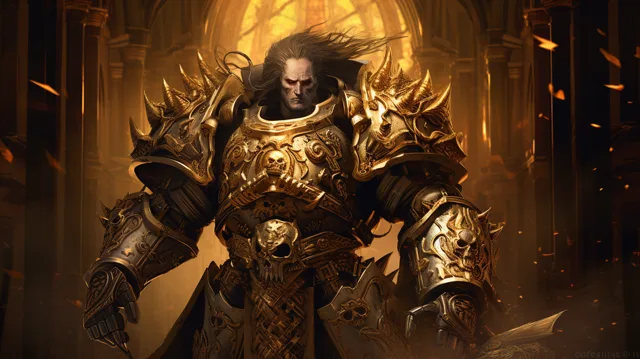
No Warmaster rules alone. At the center of the Black Legion stood Abaddon's inner circle, his Chosen, dark reflections of the old Mournival he had once served under Horus. These were not brothers bound by trust. They were monsters elevated by usefulness. Devram Korda, the Tyrant of Sarora, served as Lord Ravager. Ygethmor the Deceiver guided the crusade through prophecy and lies. Skyrak Slaughterborn spread rot and terror as Lord Corruptor. Urkrathos oversaw slaughter and enslavement as Lord Purgator.
Their number and titles could change, and failure was often fatal, but together they helped Abaddon command not a single army, but an empire of warbands. Even when the Officio Assassinorum sent a full Execution Force against them aboard Abaddon's flagship, the trap failed. The assassins died. The Chosen endured.
Around them marched the Bringers of Despair, Abaddon's elite Terminator bodyguard. Their arrival on a battlefield was never ceremonial. It meant the Despoiler himself was near, and that annihilation was close behind.
Closing Words
Abaddon began as First Captain. He became exile, refused to die with his father's dream, rebuilt the broken, and united the damned. Horus tried to conquer the Imperium in a single rebellion and failed. Abaddon chose a colder war: a war of centuries, scars, relics, bargains, and calculated devastation.
The Long War was never truly about revenge. It was about inheritance. And Abaddon has spent ten thousand years proving that he does not want to stand in Horus' shadow. He wants to finish the story.
If you enjoyed this final chapter, make sure to like, share, and subscribe to Liandrug. And if you want a cozy place to discuss lore, theories, and the darkest stories of your favourite universes, come join the Discord and be part of the growing community of lore-lovers.
Until next time, stay curious and dive deeper into the lore.
Back to Home