



Companion article
Story breakdown and lore notes
The video above is the main focus of this page. The written companion, supporting images, and lore breakdown continue below.
Opening
Welcome back, lore-lovers, to another deep dive into the shadows of fantasy. This is Liandrug, and today... we step into one of the darkest corners of the Witcher universe, a place where steel, blood, and cruelty shaped a legend feared even by witchers.
The Chronicle
Ciri had fallen in with the Rats, a reckless gang of young outlaws who lived fast, laughed loudly, and stole whatever wasn't nailed down. For a time, they gave her a sense of belonging. But every outlaw draws the gaze of justice, or something worse. And for the Rats, that something was Leo Bonhart.
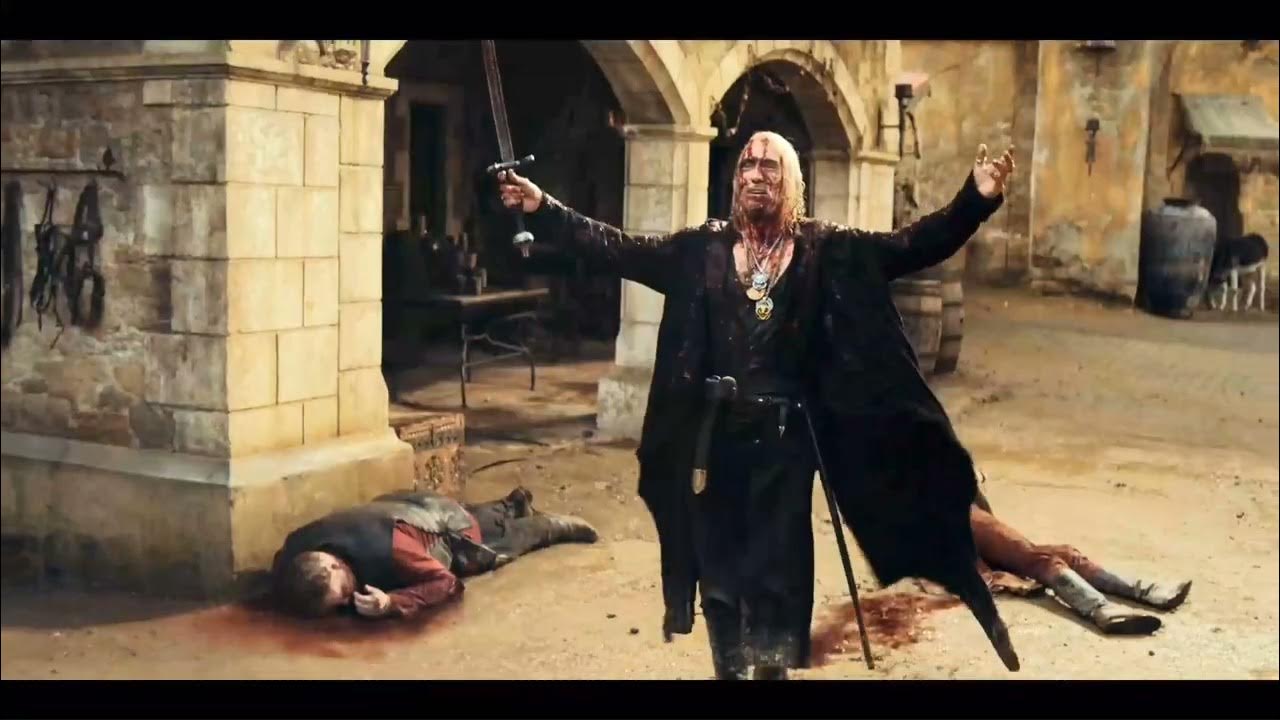
Bonhart did not hunt them. He exterminated them.
He tracked them across the dusty roads, cut them down, severed heads from shoulders, and hung bodies like slaughtered animals. There was no duel, no honor, no chance. The Rats, a terror to merchants and nobles alike, became nothing more than corpses scattered in his wake.
The first true clash between Ciri and Bonhart comes in the aftermath of his slaughter of the Rats. Overwhelmed and grieving, Ciri is forced to draw Zireael and face him, attacking with every ounce of witcher training she possesses, swift footwork, sharp sidesteps, and quick, precise strikes. Bonhart parries her blows effortlessly, yet something about her catches his interest. Her reflexes are unmistakably witcher-like: the catlike bounce, the Wolf School guard positions, even the grip Geralt once taught her. She doesn't hesitate or defend; she goes straight for killing strikes, a "little viper" unafraid of pain or death. Her advanced footwork, far beyond the skill of most grown swordsmen, tells him she is rare, dangerous, and valuable. Bonhart admits she is the first opponent in years who moves like a witcher and calls her "interesting," which, for him, is high praise. He concludes bluntly that she is "worth more alive than dead," recognizing not just her raw combat instincts and unnatural speed, but also the immense value she could have to men like Skellen and Vilgefortz, or as a spectacle in the arena. This is why he spares her life, chains her, and delivers her not to death, but into the brutal captivity that will shape the warrior she becomes.
So he captured her alive, bound her like a prize beast, and delivered her to his employer, Stefan Skellen, the imperial agent known as Tawny Owl. But Bonhart was no obedient hound. He made his own demands. And one of those demands was the young woman he had chained.
Ciri's days of running through meadows and forests were gone. Bonhart stripped her of her weapons, including her beloved sword Zireael, and forced her into a nightmare of blood and sand.
The arena of Claremont was a grotesque spectacle: a ring where slaves and criminals fought and died for the amusement of nobles. And Bonhart, cold as winter stone, became Ciri's trainer, tormentor, and overseer.
He taught her how to kill not with honor, but with calculation.
He made her watch executions.
He made her fight opponents twice her size.
He made her survive.
And all the while, he reminded her who held her life in his hands.
Bonhart was not a man possessed by rage, he was fueled by cruelty. What others did out of hatred, he did out of habit. His laughter was rare, but when it came, it came while blood stained the floor at his feet.
Yet Ciri endured him. She learned from him. She sharpened her skills against the very monster who tried to break her. And though she longed for freedom, she understood that someday she would have to face him again, blade to blade.
Lore-lovers, if you're enjoying the journey so far, don't forget to like the video and subscribe to support the channel. Your help lets me create more deep-dive stories like this one. Thank you!
The political web around Ciri tightened. Bonhart found himself entangled with Vilgefortz, Skellen, and the corrupt elite who sought to control the girl with Elder Blood. But Bonhart cared little for prophecies or destinies, he only cared for the hunt and the satisfaction it brought.
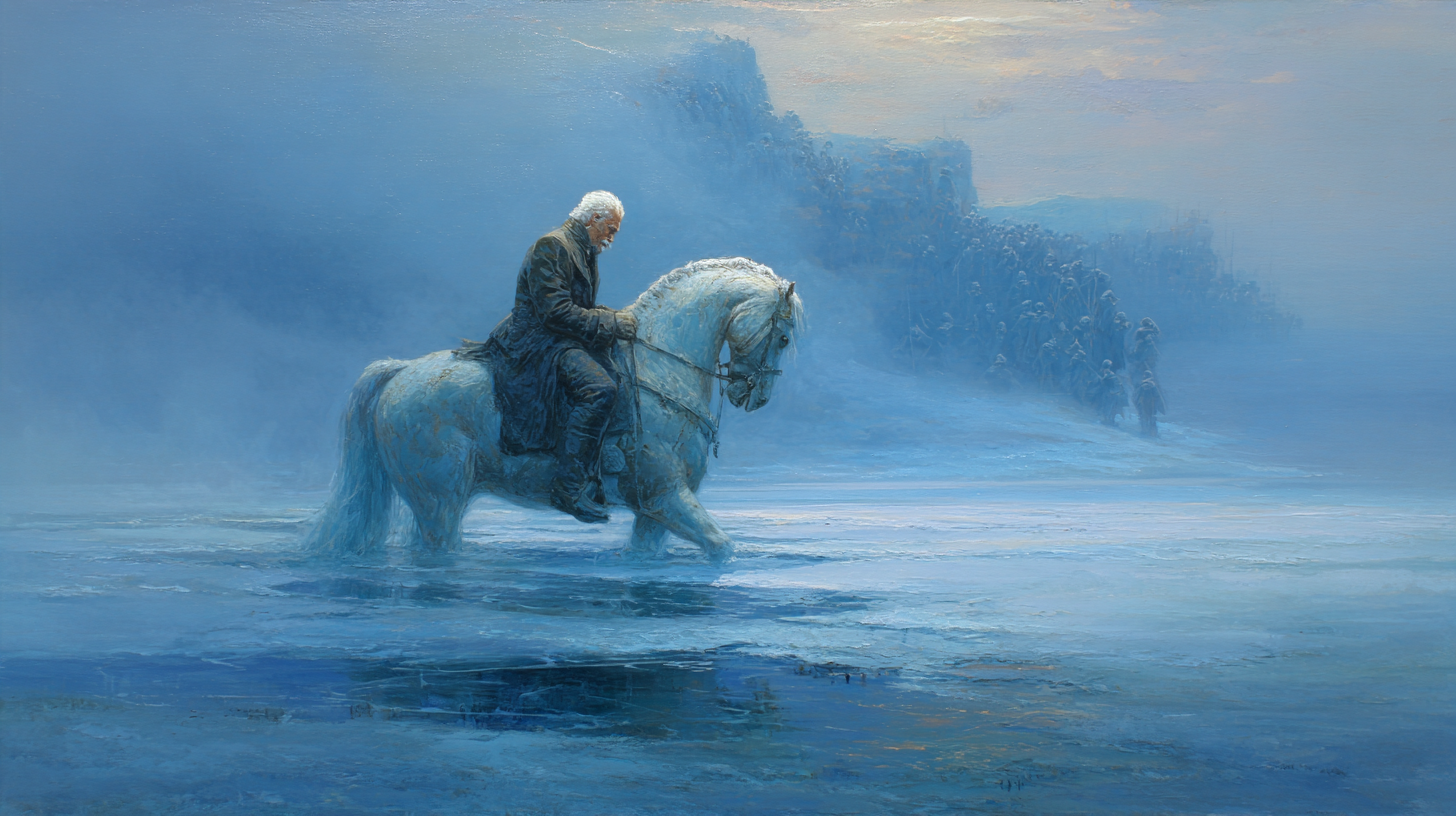
Ciri managed to escape Bonhart at a point, before facing him for their final battle. While chasing Ciri, the Wild Hunt itself materializes, ghostly riders whose presence strikes terror into the minds of ordinary mortals, and their voices enter Bonhart's thoughts, commanding him to withdraw. He feels the supernatural dread grip him, but instead of fleeing, he forces it down and prepares to fight them. Only his horse, maddened with fear, prevents him from charging into the spectral riders, cracking the ice beneath them in its desperation to escape. For a heartbeat, Bonhart stands ready to battle a myth. His courage is undeniable, legendary even, though the heart behind it is twisted and cruel.
That absolute fearlessness resurfaces when Ciri, in their last encounter at castel Stygga, presents Cahir as Geralt in an attempt to intimidate him. Bonhart's response is chilling: whether convinced or not, he tells the young man that if he truly is a witcher, then he is moments away from taking his fourth medallion. He attacks without hesitation and dispatches Cahir with cold, brutal efficiency. And he was able to tell that Cahir was no witcher.
After Bonhart's victory against Cahir, he goes on to face Ciri. At the start, he has the upper hand and even draws blood, cutting her arm before she retreats to the wooden beams above. But the fight changes the moment Ciri steps onto the unstable structure. Her childhood training on the pendulum at Kaer Morhen, a technique built around balance, timing, and unpredictable movement, becomes decisive. Bonhart, for all his knowledge, has never fought on a shifting surface that demands such acrobatic footwork. Up there, Ciri becomes untouchable; he grows frustrated and overextends, allowing her to turn the tide and kill him cleanly. This moment suggests Bonhart never received witcher training himself, he lacked the specialized coordination Kaer Morhen drills into its apprentices. On solid ground, he likely would have remained the superior swordsman. But on the beams, the advantage belonged entirely to Ciri, and Bonhart stepped unknowingly into the one battlefield where she could outperform him.
Leo Bonhart fell. The medallions he had carried slipped from his body and clattered onto the ground. Ciri, breathing hard, finally reclaimed them.
In killing Bonhart, she did more than defeat an enemy. She severed the last chain that bound her past. She walked away not as prey, not as a weapon, but as her own master.
Leo Bonhart remains one of the most terrifying villains of the Witcher saga, not because he was supernatural, but because he was entirely human. No mutation. No spell. No prophecy. Just a man who chose cruelty over compassion, power over mercy, violence over life.
His story is a reminder that on the Continent, the worst monsters often walk on two legs. And in the end, the girl he tried to break became the warrior who destroyed him.
Closing Words
And that was the tale of Leo Bonhart, one of the darkest figures to ever cross the path of destiny. If you enjoyed this story, make sure to like, share, and subscribe, and join our Discord community, where lore-lovers gather to discuss lore. Thank you for watching, and until next time, stay curious and stay legendary.
Back to Home