


Companion article
Story breakdown and lore notes
The video above is the main focus of this page. The written companion, supporting images, and lore breakdown continue below.
Opening
Whether you're new to the enchanting tales of the North or a seasoned traveler of these ancient roads, Liandrug is your guide through the captivating world of Norse mythology.
So, prepare to embark on a journey through the realms of the Aesir, the Vanir, and the giants, as we delve deep into the stories of creation, epic battles, and the intricate tapestry of fate itself.
Yggdrasil, the majestic ash tree, stands as the most perfect and beautiful of all trees, and it also claims the title of being the largest. It thrives at the nexus of nine interconnected worlds, uniting them harmoniously. This colossal tree dwarfs all others, with its branches reaching beyond the sky.
Remarkably, Yggdrasil's extensive roots span three distinct worlds, drawing sustenance from three separate wells. The deepest root delves into the underworld, Niflheim, the primordial realm that predates all others. At its heart lies the ceaselessly turbulent spring, Hvergelmir, echoing like a roaring kettle. Nidhogg, the formidable dragon, resides in these dark waters, perpetually gnawing at the root from beneath.
The second root extends into the frost giants' domain, reaching Mimir's well. Atop the highest branches of the world-tree, an eagle possesses great knowledge, while a hawk perches between the eagle's eyes. A squirrel named Ratatosk resides in the tree's branches, acting as a messenger, conveying gossip between Nidhogg and the eagle, all the while sowing discord and reveling in provoking their anger.
Grazing on the enormous branches of the world-tree are four stags, voraciously consuming its foliage and bark. Countless snakes coil around the tree's base, relentlessly biting at its roots.
Yggdrasil can be climbed, and it was from this tree that Odin, in an act of self-sacrifice, hanged himself, turning the world-tree into a gallows and himself into the gallows god. However, the gods themselves do not ascend Yggdrasil; they traverse between the realms using Bifrost, the rainbow bridge. Only the gods can tread on this rainbow path, as it would sear the feet of any frost giants or trolls who dared to scale it in an attempt to reach Asgard.
The nine worlds are as follows:
Asgard, the abode of the Aesir, where Odin resides.
Alfheim, the realm of light elves, known for their exquisite beauty.
Nidavellir, also called Svartalfheim, where dwarfs, or dark elves, live beneath mountains, crafting their marvelous creations.
Midgard, the world of humans, our earthly home.
Jotunheim, the domain of frost giants and mountain giants.
Vanaheim, the realm of the Vanir gods, who have formed alliances with the Aesir, with many Vanir residing in Asgard.
Niflheim, a realm of dark mist.
Muspell, a world of flames, where Surtr awaits.
Hel, named after its ruler, where the deceased go if they did not die valiantly in battle.
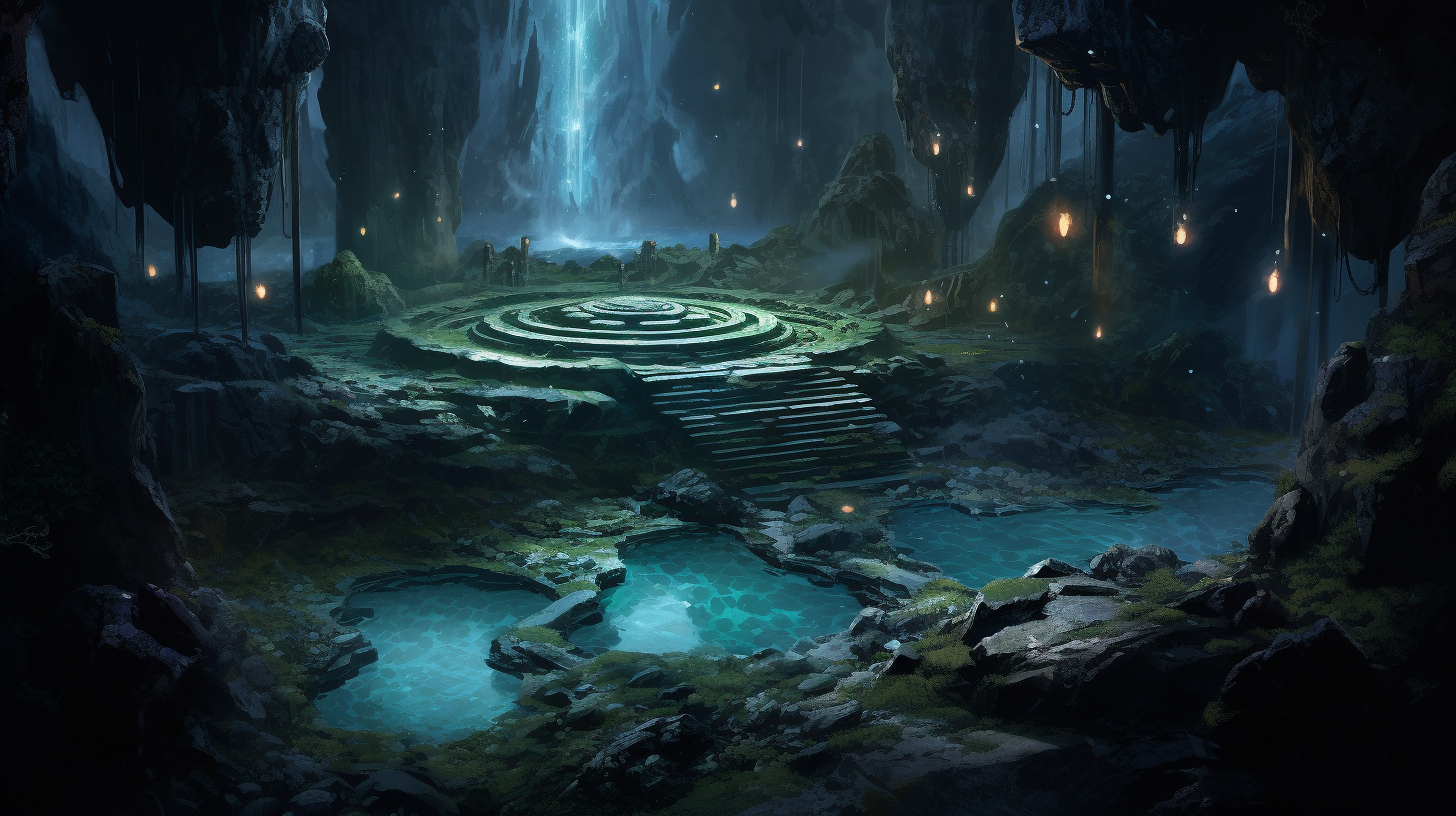
The final root of the world-tree reaches a spring in Asgard, the home of the gods. Here, the gods hold daily councils and will gather before the ultimate battle of Ragnarok. This spring is known as the well of Urd.
At this well, three wise maidens, the norns, tend to its care. They ensure that Yggdrasil's roots remain covered with mud and well-maintained. The well is the dominion of Urd, symbolizing fate and destiny, representing the past. Alongside Urd are Verdandi, representing the present, and Skuld, representing the future and intentions.
The norns play a pivotal role in shaping the fate of individuals. Beyond the trio mentioned, there are other norns, from giants to elves, dwarfs, and Vanir, both benevolent and malevolent. They collectively determine the course of one's life, bestowing good or challenging fates, whether long or short, straightforward or convoluted. These norns are the arbiters of destiny, stationed at Urd's well.
In Jotunheim, the land of the giants, there lies Mimir's well, a source of wisdom that feeds Yggdrasil, the world-tree. Mimir, renowned for his wisdom and memory, guards this well, which contains the essence of knowledge. In the early days of the world's creation, Mimir would drink from the well every morning by using the Gjallerhorn, a horn-shaped vessel, to dip into its waters and quench his thirst.
Long ago, in the youth of the world, Odin, the chief of the Aesir gods, donned a disguise as a wanderer and embarked on a perilous journey through giant territory to reach Mimir. His quest was for wisdom, and he humbly asked his uncle Mimir for a single sip from the well's waters.
Mimir, however, was reluctant to grant Odin's request, for he alone was the well's sole drinker. He remained silent, for those who are reticent seldom err in their judgment.
Odin, determined to attain the wisdom he sought, mentioned his familial connection, referring to his mother, Bestla, as Mimir's sister. Yet, even this was not enough to sway Mimir's resolve.
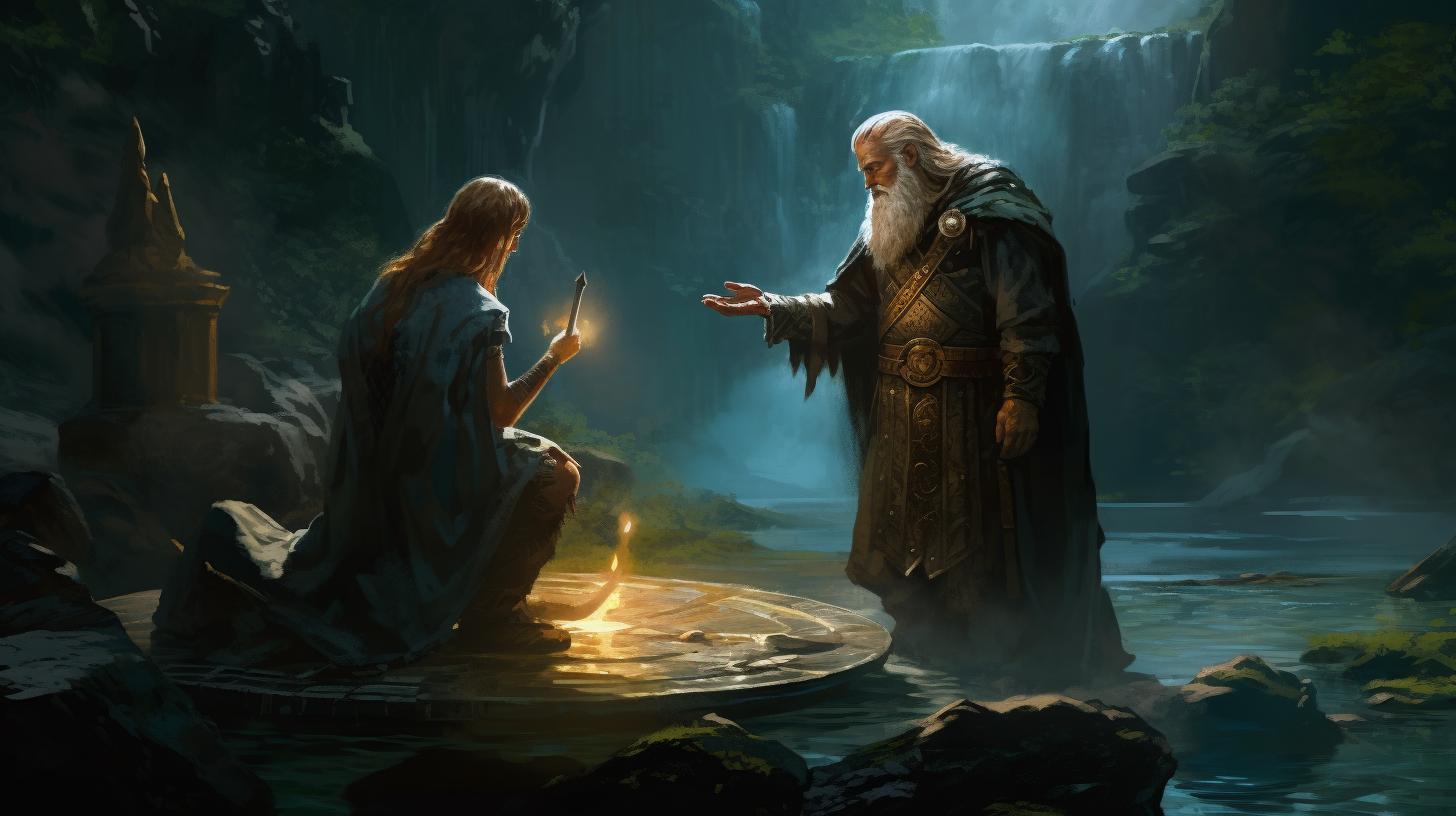
In response, Mimir made an extraordinary demand: he asked for Odin's eye in exchange for a drink from the well. Odin did not question the seriousness of the request, as he had endured great perils and risks to reach this point. He was prepared to sacrifice more than just his life for the knowledge he coveted.
With a resolute expression, Odin simply requested a knife. Following a decisive action, he placed his eye into the pool, where it gazed back at him through the water. He then filled the Gjallerhorn with water from Mimir's well and raised it to his lips. The water was chilling as he consumed it, and in that moment, wisdom flooded into him. He found that he could see further and with greater clarity through his remaining eye than he ever had with both.
From then on, Odin acquired various epithets such as "Blindr," the blind god, "Hoarr," the one-eyed, and "Baleyg," the flaming-eyed one. His sacrificed eye remained preserved in Mimir's well, surrounded by the waters that nourished the world ash, granting it the ability to see everything yet nothing.
As time passed and the conflict between the Aesir and the Vanir concluded, Odin appointed Mimir as an adviser to the Aesir god Hoenir, who would now lead the Vanir. Hoenir, with Mimir's counsel, seemed kingly and wise, but when left to his own devices, he struggled to make decisions, leading to the Vanir's dissatisfaction. Their revenge was directed not at Hoenir but at Mimir. They severed Mimir's head and sent it to Odin.
Rather than respond with anger, Odin preserved Mimir's head by applying specific herbs to prevent decay. He recited charms and incantations to maintain Mimir's wisdom. Soon, Mimir's eyes opened, and he resumed offering valuable advice.
Odin returned Mimir's head to the well beneath Yggdrasil, where he placed it alongside his own eye. There, they rested in the waters of knowledge, bearing insights into both the past and the future.
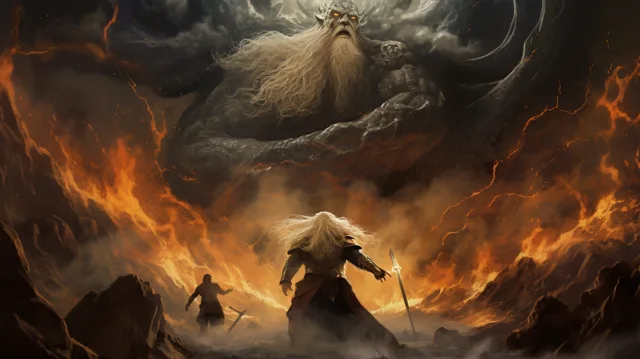
Odin entrusted the Gjallerhorn to Heimdall, the watchman of the gods. It is prophesied that on the day the Gjallerhorn is blown, it will awaken the gods, regardless of their location or depth of slumber. Heimdall will sound the Gjallerhorn only once, signaling the end of all things, at the fateful event known as Ragnarok.
Closing Words
Thank you for joining me on this mystical journey through the heart of Norse mythology. If you've enjoyed unraveling these age-old tales as much as I have, remember to like, share, and subscribe to Liandrug.
By subscribing, you become part of our lore-loving community, ensuring that you never miss a new chapter in our exploration of the sagas and legends.
Until our next adventure, may the gods watch over you, and may your love for Norse mythology continue to grow.
Back to Home