



Companion article
Story breakdown and lore notes
The video above is the main focus of this page. The written companion, supporting images, and lore breakdown continue below.
The Chronicle
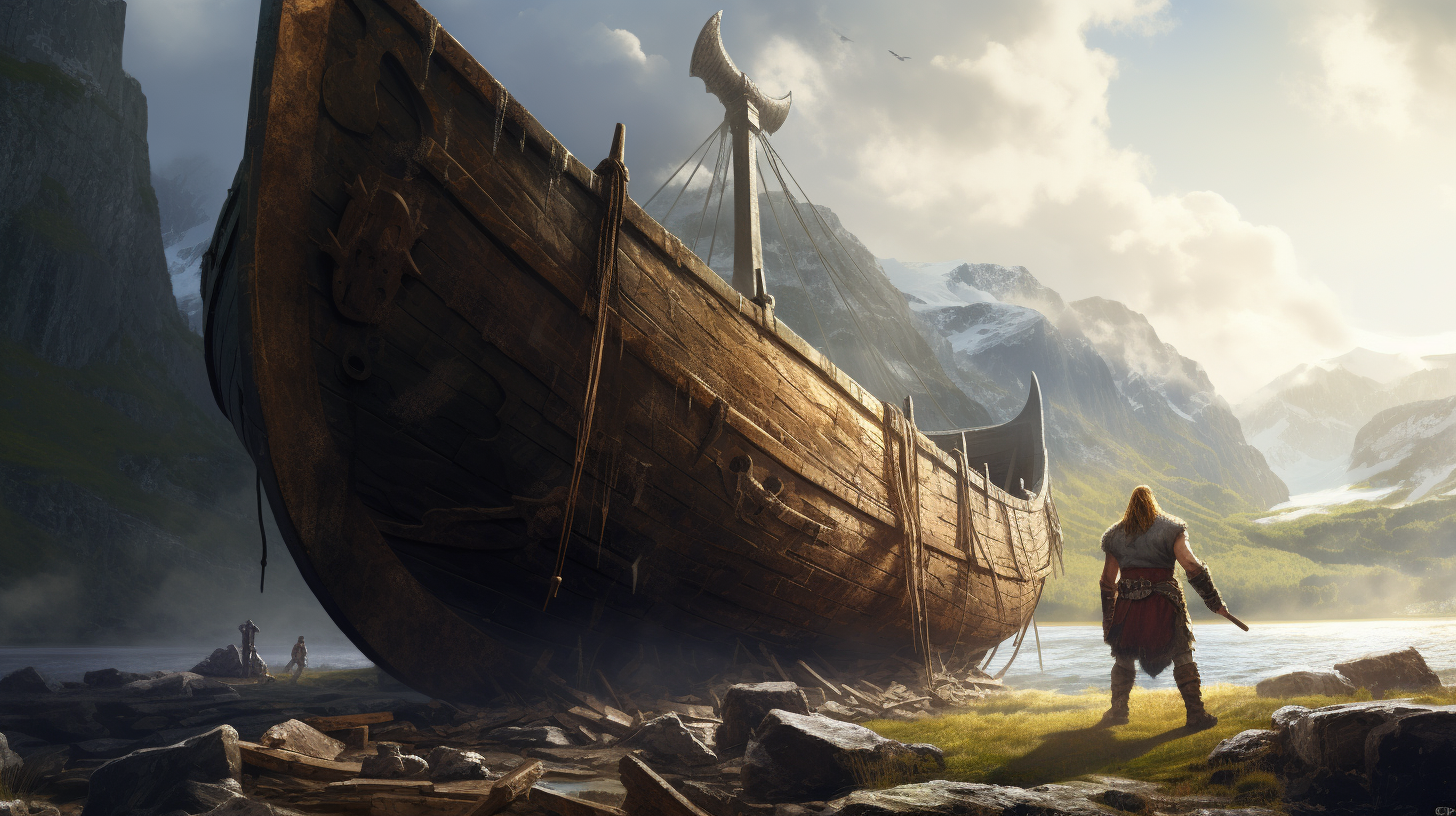
In the early days of Asgard, when Thor was away fighting trolls in the east, Odin realized the need for protection. Concerned about potential threats from giants and trolls, Odin proposed building a high and thick wall around Asgard. However, Loki and Heimdall pointed out the challenges of such a construction.
A stranger, appearing as a smith, arrived in Asgard and offered to build the wall in three seasons--winter, summer, and another winter. In exchange, he requested three things: the hand of the beautiful goddess Freya in marriage, the sun, and the moon. Freya remained silent but visibly angered by the proposition. The gods were left to consider the stranger's audacious demands.
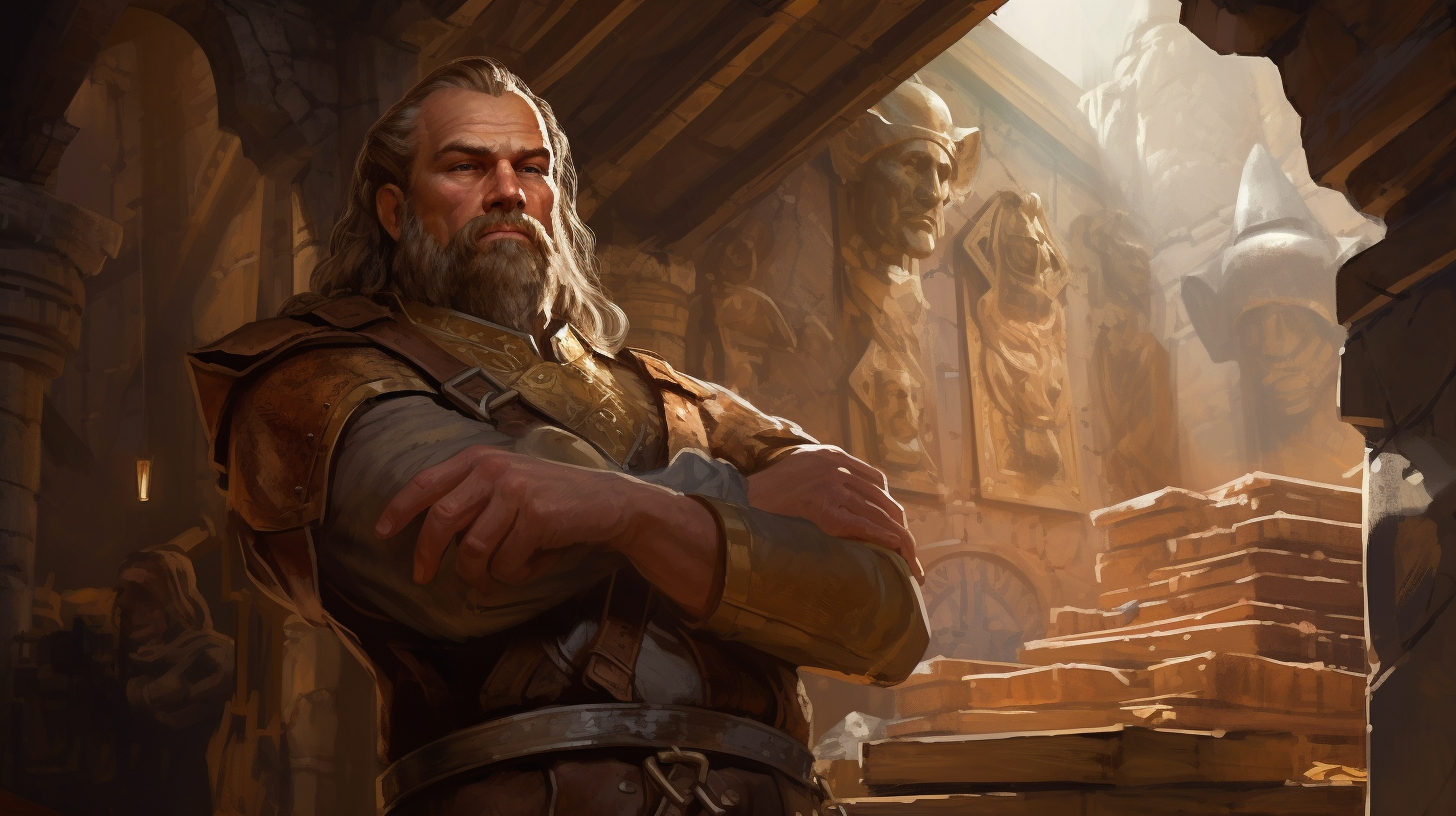
Odin instructed the stranger to wait outside and attend to his stallion, Svadilfari. The gods deliberated, unanimously agreeing that Freya, the sun, and the moon were too precious to be given away, despite the stranger's offer to build the wall in three seasons.
As the gods discussed, Loki drew attention to a crucial point: the stranger's proposed task was impossible. No one, mortal or divine, could complete such a colossal wall in eighteen months. Freya dismissed Loki's insight, deeming the gods foolish for believing in the stranger's capabilities.
Loki suggested a compromise: agree to the stranger's demands but impose stringent conditions. The man must build the wall alone, and instead of three seasons, he would have only one. If any part of the wall remained unfinished by the first day of summer, the gods would owe him nothing. The gods, except for Freya, were impressed with Loki's proposal.
Heimdall questioned why the stranger would accept such challenging terms. Frey, Freya's brother, questioned the advantage of such an arrangement, prompting Loki to explain patiently. He detailed a plan where the smith would begin building the wall, work for six months without pay, and then be driven away. The unfinished work would serve as the foundation for the gods to complete the wall over the years. Loki assured the gods that there was no risk of losing Freya, the sun, or the moon.
Tyr, the god of war, raised concerns about the builder agreeing to complete the wall in one season. Loki acknowledged the possibility of refusal but pointed out the stranger's arrogance and willingness to accept challenges. The gods praised Loki for his clever plan, celebrating the prospect of getting their foundations built for free.
However, Freya remained silent, mistrusting Loki and the direction of the conversation. She fingered her necklace, a gift from the Brisings, stolen by Loki in the form of a seal and later returned by Heimdall after a battle with Loki in seal form.
The gods summoned the builder, who observed the jovial atmosphere but noticed Freya's lack of a smile. Loki informed the builder of the shortened timeline, emphasizing that if the wall wasn't finished by the first day of summer, he would leave unpaid. However, if the builder succeeded, he would receive the promised rewards: the sun, the moon, and Freya. The condition was that he must build the wall alone, without any help.
The stranger remained silent, contemplating Loki's words and conditions. The stranger, after considering the gods' condition of working alone, requested that his horse, Svadilfari, be allowed to help haul stones for the wall. Odin and the gods found this request reasonable, acknowledging the usefulness of horses for such tasks. To seal the agreement, both the gods and the stranger swore powerful oaths on their weapons, Draupnir (Odin's golden arm-ring), and Gungnir (Odin's spear), making the oath unbreakable.
The next morning, the gods watched as the stranger began digging the trench for the wall's foundation. Despite the impressive speed and depth of his digging, Loki remained skeptical, emphasizing the challenge of hauling stones from the mountains and constructing a tightly fitted wall. Freya expressed her disdain for Loki's doubts.
As the sun set, the builder, mounted on his horse, departed for the mountains to collect rocks. The gods observed the departure, and Loki predicted the builder's return in a week, curious to see the horse's hauling capacity. Despite the merriment in the feast hall, Freya did not partake in the laughter.
Before dawn, snowflakes fell, hinting at the approaching winter. Heimdall, ever vigilant, woke the gods in the darkness. They gathered by the trench, awaiting the return of the builder and Svadilfari in the pale dawn light.
The horse, Svadilfari, continued dragging heavy blocks of granite, leaving deep ruts in the earth. Upon seeing the gods, the builder greeted them cheerfully, waving and pointing to the rising sun. Balder and Kvasir marveled at the horse's strength, while Loki dismissed it, claiming the horse would tire, especially with the approaching challenges of winter.
Despite Loki's reassurances, Freya expressed her hatred for him and left, choosing not to witness the builder's progress. Each night, the builder, accompanied by Svadilfari and the stone-boat, headed to the mountain, returning each morning with another twenty massive blocks of granite.
As the wall grew larger and more imposing, Odin gathered the gods and reminded them of the unbreakable oath they had sworn: if the builder completed the wall in time, they would grant him the sun, the moon, and Freya's hand in marriage. Kvasir speculated that the builder might be more than a man, possibly a giant.
Balder wished for Thor's presence, but Odin noted that even if Thor returned, the oaths they made were binding. Loki, once again, tried to downplay the situation, claiming that the builder, even if he were the most powerful giant, could not finish the wall before the first day of summer--it was impossible.
Heimdall expressed a longing for Thor's guidance, but the snowfall, even in its depth, failed to impede the relentless progress of the wall-builder and his stalwart horse, Svadilfari. Through snowdrifts, blizzards, steep hills, and icy gorges, they pressed on. As the days grew longer, dawn arrived earlier, and the snow began to melt, transforming into thick, clinging mud.
Loki predicted the horse's failure in the muddy terrain, but Svadilfari remained sure-footed and determined, hauling rocks through the mud, leaving deep gashes in the hillsides. The builder continued his work, now ascending steep heights to place each rock precisely. The approaching spring brought forth flowers, and the wall surrounding Asgard began to take shape--a glorious and impregnable structure.
As the final day of winter arrived, the wall was nearly complete. The gods in Asgard, seated on their thrones, contemplated the consequences of their oath.
"We have given away the sun," lamented Balder.
"We placed the moon to mark the days and weeks, and now there will be no moon," added Bragi, the god of poetry.
Tyr expressed concern for Freya, to which she responded with icy disdain, suggesting that if the builder was indeed a giant, she would marry him and go to Jotunheim. She mused about whom she would hate more--him for taking her away or the gods for giving her to him. The gods faced the realization that their oaths had consequences that could not be undone.
As tension rose in the hall, Loki attempted to pacify Freya, but she insisted that if the giant took her, the sun, and the moon, she wished to see the one responsible for this calamity killed before departing. Odin, who had remained silent, agreed to her request.
Loki, ever the trickster, tried to deflect blame, claiming all the gods were equally responsible. Freya, however, accused Loki of talking the others into the disastrous decision and declared that she would see him dead before leaving Asgard. Despite Loki's attempts to justify the collective responsibility, the gods, including Odin and Balder, held him accountable.
Odin acknowledged the need for the builder to fail in his wager without violating the oath. Threatening Loki with a painful and shameful death, Odin made it clear that the consequences would be dire if the builder succeeded.
Left with little choice, Loki reluctantly accepted the task. The gods' expressions conveyed anger and resentment, promising a grim fate for him. Loki left the hall without interference, and the builder continued his work on the wall, nearing completion.
With only twenty more granite blocks to place, the builder descended the scaffolding, whistling for his horse. The following day, on the first day of summer, as the sun set, he would finish the wall and depart Asgard with his promised wages. The stage was set for the final act in this high-stakes drama.
The builder, ready to hitch the stone-boat to Svadilfari, noticed an oddity as he whistled for his horse. Svadilfari, typically obedient, hesitated and seemed distracted in the meadow. The builder, watching from a distance, felt an unusual twinge of concern.
Whistling again, the builder anticipated his horse's approach. Svadilfari, shaking his head and prancing, displayed a curious behavior--taking steps forward and then backward, seemingly enticed by an unknown scent in the warm spring air. The builder called out once more, and Svadilfari responded, cantering across the meadow toward him.
As the horse approached, the builder felt a moment of satisfaction. However, the rhythmic hoofbeats were accompanied by an unexpected surprise. The echoes bouncing off the high granite wall created an illusion of multiple horses approaching. The builder, momentarily confused, quickly realized his mistake--it was not just Svadilfari. Two sets of hoofbeats echoed through the meadow.
The second horse, a chestnut mare, was unmistakably female. As Svadilfari pursued her, she ignored him, seemingly indifferent to his advances. She ran gracefully, grazing on the grass as Svadilfari attempted to catch her, creating a playful chase that unfolded before the builder's eyes. The strange arrival of the chestnut mare added an unexpected twist to the builder's carefully laid plans.
As Svadilfari and the chestnut mare disappeared into the shadows of the wood, the builder, frustrated and cursing, waited for his horse's return. However, Svadilfari did not reappear, and the shadows lengthened without any sign of the stallion.
Realizing that waiting was futile, the builder returned to his stone-boat and began hauling it toward the mountain quarry. As dawn arrived, there was no sight of Svadilfari. The builder worked tirelessly, pulling the stone-boat laden with ten blocks, cursing and heaving the stones toward the wall. Beautiful Freya stood at the gateway, observing him.
Freya pointed out that he only had ten stone blocks, insufficient to finish the wall. The builder remained silent, his face devoid of the earlier satisfaction. Freya informed him that Thor would soon return from the east, adding a layer of pressure to the situation.
The gods of Asgard gathered to watch the builder's efforts. They stood around Freya protectively, observing in silence at first. Gradually, smiles and chuckles emerged among them as they questioned the builder's progress. The once-confident builder, now faced with the unforeseen disappearance of Svadilfari, struggled with his task, the weight of his unmet wager pressing down on him.
As the gods taunted the builder, Balder and Bragi made sarcastic remarks about the sun and the moon. Laughter erupted among the gods, mocking the builder's predicament. Unable to bear the mockery, the builder released the stone-boat and accused the gods of cheating, his face flushed with exertion and anger.
Odin defended their actions, stating that they had not cheated any more than the builder had deceived them about being a giant. The builder, growing increasingly furious, grabbed a rock, breaking it in two and revealing his colossal form. Now a towering mountain giant, he accused the gods of being cheats and vile oath-breakers. If he still had his horse, he claimed, he would finish the wall and claim Freya, the sun, and the moon as his wages, leaving the gods in darkness and cold.
Odin insisted that no oath had been broken, but the enraged mountain giant, with rocks in hand, charged toward the gods. It was then that he noticed Thor standing behind them, holding the mighty Mjolnir, his iron hammer. Thor swung the hammer and released it, causing a flash of lightning and a resounding boom of thunder.
The mountain giant saw the hammer hurtling toward him, rapidly growing in size. In an instant, he saw nothing more.
With the giant defeated, the gods took charge of completing the wall. Although it took weeks to cut and haul the remaining blocks from the quarries, the gods, lacking the skill of the master builder, struggled to shape and fit the stones as seamlessly as he had done. The completion of the wall marked the end of this tumultuous chapter in the gods' history.
There were some gods who thought Thor had acted too hastily in dispatching the giant and believed they should have allowed him to get closer to completing the wall. Thor, however, appreciated the gods saving some fun for him upon his return from the east.
Curiously, Loki, usually one to revel in praise, was conspicuously absent after luring away Svadilfari. Rumors circulated about a magnificent chestnut mare seen on the meadows beneath Asgard. Loki remained missing for almost a year until he reappeared with a gray foal, Sleipnir, which had eight legs instead of the usual four. The foal treated Loki as its mother, growing into a majestic gray stallion, the swiftest and strongest horse ever known, capable of outrunning the wind.
Loki presented Sleipnir to Odin as a gift, boasting it to be the finest horse among gods and men. While many admired Sleipnir, only the bravest dared mention its unusual parentage in Loki's presence, for Loki harbored resentments. Thus, the gods received their impregnable wall, but not without twists and turns orchestrated by the cunning Loki, who, as always, left his mark on the tale of Asgard.
Closing Words
As our journey through Norse lore concludes, I hope you've enjoyed the epic tale of the Builder of Asgard's Wall. If you're a true lore-lover seeking more mythic adventures, don't forget to like, share, and subscribe to Liandrug. Join our community of lore-lovers, and together, let's keep the magic alive. Until next time, may the stories of the gods continue to captivate your imagination!
Back to Home