


Companion article
Story breakdown and lore notes
The video above is the main focus of this page. The written companion, supporting images, and lore breakdown continue below.
The Chronicle
In the vast, mysterious realm of the Lands Between, there exists a force that transcends mortal comprehension--an artifact not forged of metal or shaped by mortal hands, but instead born from the will of an Outer God. This artifact, the Elden Ring, lies at the center of all existence, governing the flow of time, the balance between life and death, and the cosmic order of the world. But the Elden Ring is not a conventional ring. It is a metaphysical construct--a system of law, an engine of divine power, and the blueprint for reality itself.
The Elden Ring is best understood not as a physical object, but as a symbolic and metaphysical structure. It is the embodiment of the Greater Will's design--an Outer God that seeks to impose its version of order upon the Lands Between. The Elden Ring is the mechanism by which that divine order manifests in the world.
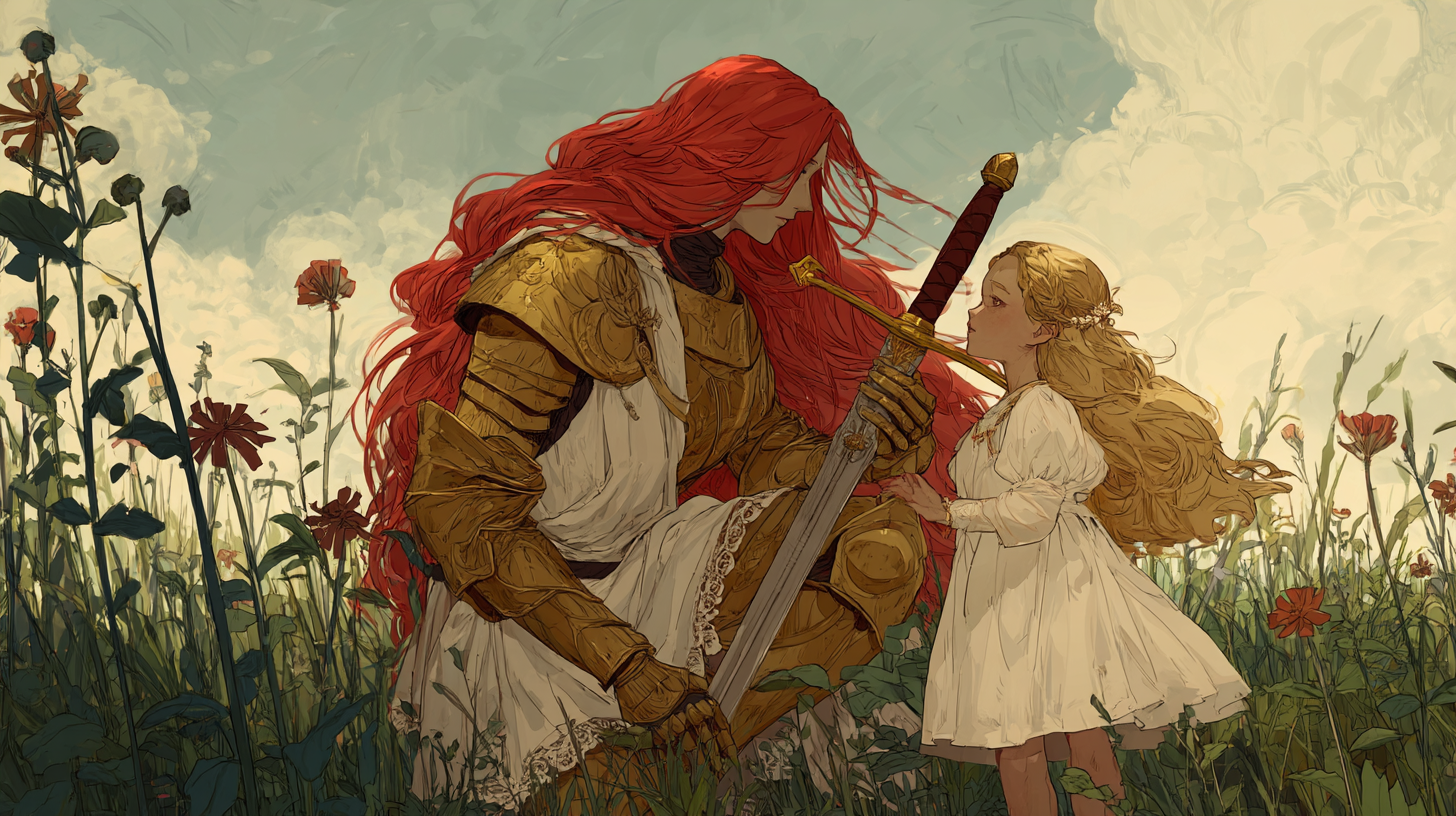
Rather than being a literal ring, it is composed of various Great Runes, each representing a fundamental aspect of reality. These runes govern everything from life and death to time, fate, and more. The Elden Ring acts as a kind of divine operating system. When complete, it keeps the world in harmony, ensuring the stability of both the natural and metaphysical laws that underpin existence.
The Elden Ring's presence is felt in every corner of the Lands Between. It is what allows the Golden Order to flourish--a system of faith, logic, and metaphysics that binds together all things under a single, radiant truth. Yet, the Golden Order is not eternal. Like all systems, it can be bent, broken, or replaced.
The Greater Will is the mysterious force behind the Elden Ring. It is not a god in the traditional sense but an unknowable, distant cosmic entity. It seeks to impose order upon the world from afar, and the Elden Ring is the tool it uses to accomplish this goal. To enact its will upon the world, the Greater Will requires a vessel--a mortal being to carry the Elden Ring and embody its principles.
This is where Queen Marika the Eternal enters the tale.
Queen Marika was not born a goddess, but a Numen, one of a mysterious people believed to hail from the distant Land of Shadow. As a chosen Empyrean, she was elevated by the Greater Will to serve as the vessel of the Elden Ring. In this role, she became not only the divine ruler of the Lands Between but also the living embodiment of the Golden Order.
Marika's rule was transformative. She enacted the will of the Greater Will with fervor and reshaped the world according to its divine logic. But even divine vessels can question their creators. Over time, Marika began to bend the laws of the Elden Ring to serve her own vision--one that diverged from the Greater Will's.
If you're enjoying the journey so far, lore-lovers, don't forget to like and subscribe. It helps Liandrug grow and reach more curious minds, and it fuels more videos like this--crafted for those who love to dig into the depths of forgotten myths and shattered worlds. Thank you.
One of Marika's most consequential acts was the removal of the Rune of Death from the Elden Ring. This rune governed the natural end of life, and by extracting it, Marika halted the process of true death. Her demigod children were rendered effectively immortal. But this act came with a terrible cost--it disrupted the balance of the world, breaking the cycle of life and death that had once kept existence in check.
To keep the Rune of Death hidden, Marika entrusted it to her loyal shadow, the beast Maliketh, who guarded it with unwavering loyalty. Yet, no matter how securely it was hidden, the imbalance it caused would echo throughout the ages.
The stability of the Lands Between was shattered during a night forever etched into history--the Night of the Black Knives. A group of assassins, acting in secret and wielding blades imbued with a stolen fragment of the Rune of Death, carried out a ritual assassination of Godwyn the Golden, Marika's beloved son.
The consequences were dire and unnatural. Godwyn's body perished, but his soul was destroyed, resulting in a grotesque half-death. In contrast, others who died that night suffered soul-death without physical decay. This terrifying event marked the first true death of a demigod and fractured the illusion of immortality.
The mastermind behind this assassination was Ranni the Witch, another Empyrean. In defying the Greater Will, Ranni sought to sever herself from its control and initiate a new order--one free of divine imposition. Her actions would spark an unstoppable chain reaction.
Grief-stricken and enraged by her son's fate, Marika enacted her most dramatic act of rebellion. She took the hammer of her consort, Radagon, and shattered the Elden Ring. This act of defiance against the Greater Will split the Elden Ring into Great Runes, scattering its power across the realm and severing the world from divine order.
This event, known as The Shattering, plunged the Lands Between into an age of ruin. The demigods--Marika's many children--claimed these Great Runes for themselves and waged war against one another for dominance. Each sought to assert their vision of order or chaos, but none could restore the Elden Ring to its former glory.
Without a central authority or complete order, the Golden Order crumbled. The Erdtree, once a symbol of divine blessing and prosperity, now stood as a hollow monument. The world was left in disarray, and the people suffered as reality itself began to bend and twist under the strain of the broken ring.
Each Great Rune is more than a fragment of power--it is a piece of the fundamental design of the universe. The Great Runes that remained after the Shattering were inherited by demigods, and each rune represented their nature, ideals, or sins.
Some examples include:
The Mending Rune of the Death-Prince: Created through the legacy of Fia, it reintroduces the concept of death into the world, acknowledging its necessary role.
The Mending Rune of Perfect Order: Sought by the stoic Goldmask, it aims to repair the inconsistencies within the Golden Order and enforce a pure, unshakable version of reality.
The Mending Rune of the Fell Curse: Birthed by the Dung Eater, it introduces an eternal curse into the world's fabric, challenging every notion of grace and purity.
These runes, while fragments of a shattered whole, offer the possibility of reshaping the world. With the power of the runes, one might not only restore the Elden Ring, but redefine what reality itself means.
Conclusion: The Elden Ring as a Living Law
The Elden Ring is more than just a divine artifact; it is the living law that binds the Lands Between. Its Great Runes define the laws of nature and the structure of the world. When whole, the Ring ensures stability, life, and order. When broken, it unleashes chaos, death, and transformation.
As a Tarnished, the player steps into this broken world with a single goal: to gather the runes, confront the demigods, and become Elden Lord. Yet, what that truly means depends on the runes you choose to wield and the order you decide to impose. Will you restore the Golden Order, embrace chaos, or forge a new path untouched by gods?
In the end, the Elden Ring is not simply a thing to be reclaimed--it is a question to be answered. What kind of world will you create?
Closing Words
And so, the tale of the Elden Ring draws to a close--at least for now. If you enjoyed this story, please like, share, and subscribe to Liandrug, where the echoes of lost legends are always waiting to be heard. And if you want to dive even deeper, join our Discord--a cozy, welcoming realm for lore-lovers like you, where we explore, discuss, and connect over the stories that shape our favorite worlds. Until next time, may grace guide you.
Back to Home